Blog
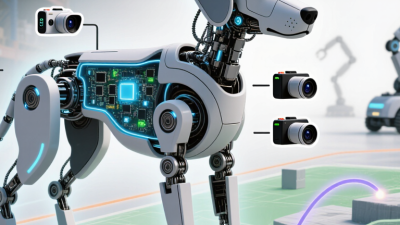
What Is an AI Robot Dog and How Does It Work?
An AI robot dog is more than a four-legged machine. It combines cameras, depth sensors, motion sensors, onboard computing, and software that helps it interpret its surroundings. As it walks across a warehouse floor or climbs uneven steps, it estimates its position, adjusts its balance, and chooses where to place each foot. That response happens repeatedly, often in real time. The result can look surprisingly natural. It can still stumble.
The International Federation of Robotics reported nearly 158,000 professional service robots sold in 2022, a 48% increase over the previous year, in its World Robotics 2023 report. The figure covers many kinds of service robots, not robot dogs alone. It nevertheless signals growing demand for machines that perform practical tasks beyond factory assembly. NVIDIA founder and CEO Jensen Huang has described the broader shift as “the next wave of AI is physical AI.” An AI robot dog brings that idea into the physical world: software must respond to real surfaces, changing light, obstacles, and sensor errors.
How does it work? Sensors collect data; perception software identifies objects and terrain; planning systems select a route; and motors carry out each movement. Some models also use remote control or cloud tools for inspection and mapping. Their capabilities depend on hardware, training, and the environment. A polished demo does not prove reliable performance in every workplace. Understanding those limits matters as much as understanding the technology.
Read more »
 By:Ethan
- October 29, 2026
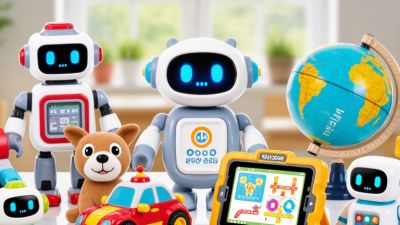
10 Best AI Toys for Kids Wholesale in 2026
The 2026 wholesale market for AI toys is becoming more practical, selective, and demanding. Buyers are no longer impressed by flashing lights alone. They want toys that encourage curiosity, conversation, creativity, and safe discovery.
Mitchel Resnick, LEGO Papert Professor of Learning Research at MIT, once said, “The best way to become a better learner is to become a better designer.” His idea remains highly relevant to AI toys. A strong product should let children build, test, adjust, and imagine. It should not simply answer every question for them.
This guide examines ten AI toys suitable for wholesale sourcing in 2026. Each option is considered through several business and user-focused details. These include educational value, age suitability, voice interaction, data protection, material quality, battery performance, packaging, and expected retail appeal. A toy may look exciting on a trade-show shelf, yet perform poorly after repeated use. That happens.
Real testing matters.
Wholesalers should also inspect privacy settings, parental controls, software updates, and customer support. These details can affect returns and long-term trust. Some products may offer impressive artificial intelligence but lack durable buttons or clear instructions. Others may be simpler, but more reliable for everyday family use.
The selection is not perfect. Technology changes quickly, and children’s needs vary widely. Still, these ten AI toys offer useful starting points for retailers seeking engaging, responsible, and commercially realistic products. Safety documentation should always be reviewed before placing a wholesale order.
Read more »
By:Ethan
- October 21, 2026
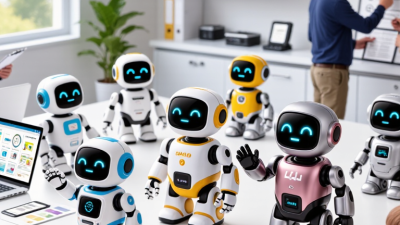
How to Source AI Robot Toys in 2026?
Sourcing AI robot toys in 2026 requires more than finding a futuristic design at a low price. Buyers must evaluate safety, software reliability, supplier capability, and long-term customer support. A toy may speak, move, recognize commands, and connect to an app. Each feature adds another sourcing risk.
Begin with a clear product brief. Define the target age, learning purpose, battery type, voice functions, materials, and expected retail price. Request working samples, not only polished videos. Test the robot on a real table, with background noise, weak Wi-Fi, and small children nearby. Small details matter. A loose charging port can create returns.
Supplier verification should include factory records, production capacity, quality procedures, and independent test reports. Confirm applicable toy safety, electrical, radio, battery, and data privacy requirements for every sales market. Requirements may differ between regions. Never rely on a supplier’s attractive certificate image alone. Check document validity and testing scope.
AI performance also needs careful review. Ask where voice data is processed, how accounts are protected, and whether parents can delete stored information. Confirm firmware update policies and offline functions. A clever demo can hide poor daily usability. That happens.
Cost planning must include tooling, packaging, software maintenance, spare parts, inspection, shipping, tariffs, and warranty claims. Low factory pricing may become expensive after launch. I would still leave room for mistakes. Forecasts are rarely perfect, especially for new interactive products. Careful sampling, documented communication, and staged orders can reduce avoidable surprises while building a more dependable AI robot toys supply chain.
Read more »
By:Ethan
- October 21, 2026
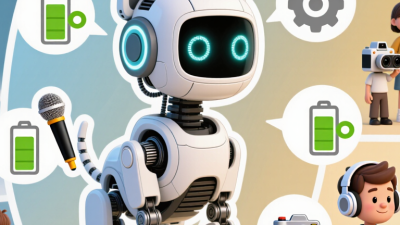
How to Choose an AI Pet Robot in 2026?
Choosing an AI pet robot in 2026 requires more than comparing expressive eyes, voice features, and glossy demonstrations. The International Federation of Robotics reported millions of consumer service robots sold globally in 2023, showing that home robotics is becoming practical, not merely experimental. Meanwhile, the American Pet Products Association’s 2025–2026 National Pet Owners Survey indicates that roughly 95 million U.S. households own a pet. These figures reveal a growing audience for robotic companionship, but they do not prove that every robot creates meaningful emotional value.
A reliable buying decision should examine behavior, hardware, privacy, and long-term support. Check whether the AI pet robot responds consistently in a quiet room, beside a television, and near a sleeping child. Examine its microphone controls, camera permissions, data-retention policy, charging time, battery replacement options, and software-update history. NIST’s AI Risk Management Framework emphasizes reliability, transparency, privacy, and accountability, principles that matter even in a small desktop companion. A cute face cannot repair weak security.
Some weaknesses remain. Consumer reports rarely measure loneliness reduction, attachment, or years of daily use. Marketing language can also exaggerate intelligence. I would not treat a robot as a substitute for human care, real pets, or professional support. Still, the right model can offer reminders, responsive interaction, and a comforting presence during ordinary routines. Look beyond the first five minutes of entertainment. Choose the device that remains useful after the novelty fades.
Read more »
By:Ethan
- October 21, 2026
