Choosing an AI pet robot in 2026 requires more than comparing expressive eyes, voice features, and glossy demonstrations. The International Federation of Robotics reported millions of consumer service robots sold globally in 2023, showing that home robotics is becoming practical, not merely experimental. Meanwhile, the American Pet Products Association’s 2025–2026 National Pet Owners Survey indicates that roughly 95 million U.S. households own a pet. These figures reveal a growing audience for robotic companionship, but they do not prove that every robot creates meaningful emotional value.
A reliable buying decision should examine behavior, hardware, privacy, and long-term support. Check whether the AI pet robot responds consistently in a quiet room, beside a television, and near a sleeping child. Examine its microphone controls, camera permissions, data-retention policy, charging time, battery replacement options, and software-update history. NIST’s AI Risk Management Framework emphasizes reliability, transparency, privacy, and accountability, principles that matter even in a small desktop companion. A cute face cannot repair weak security.
Some weaknesses remain. Consumer reports rarely measure loneliness reduction, attachment, or years of daily use. Marketing language can also exaggerate intelligence. I would not treat a robot as a substitute for human care, real pets, or professional support. Still, the right model can offer reminders, responsive interaction, and a comforting presence during ordinary routines. Look beyond the first five minutes of entertainment. Choose the device that remains useful after the novelty fades.
What Defines an AI Pet Robot in 2026?
What Defines an AI Pet Robot in 2026?
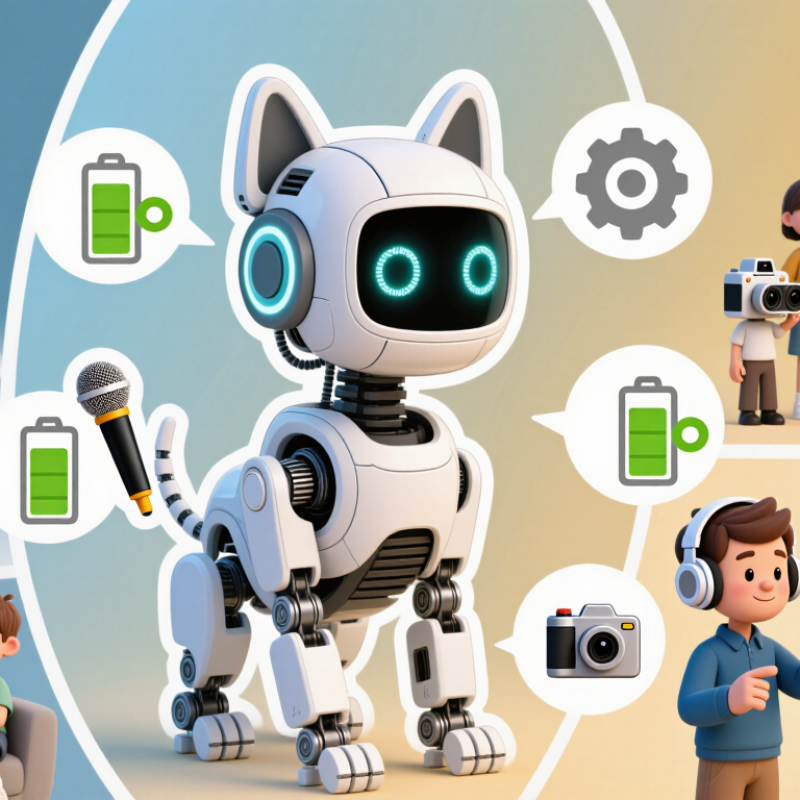
An AI pet robot is more than a moving speaker with animated eyes. It should sense voices, faces, obstacles, touch, and household routines. Multimodal perception matters because real homes are noisy, cluttered, and unpredictable. A useful robot might follow you from the kitchen, pause near stairs, and respond differently to a whisper or a sharp command. It should also remember preferences without pretending to possess human feelings.
The International Federation of Robotics reported nearly 20 million consumer service robots sold globally in 2023. That figure shows broad interest, but it does not prove intelligent companionship. IDC forecasts worldwide artificial intelligence spending will reach 632 billion dollars by 2028. Buyers should therefore examine the intelligence behind the movement, not just the shell. Look for local processing, clear data controls, encrypted communication, and software updates with published support periods. Can the robot work when the internet fails? Test it.
Emotional design remains important. A robot that notices a quiet voice may lower its activity, offer a gentle response, or suggest a routine. However, simulated empathy can feel repetitive after several weeks. I have found that small, reliable actions often matter more than dramatic expressions. The device should learn safely, explain its decisions, and allow memory deletion. Battery life, repair access, noise levels, and child-safe movement deserve equal attention. A charming demo can hide weak daily performance. Judge the robot beside your sofa, not only under bright showroom lights.
FAQS
It should recognize voices, faces, touch, obstacles, and household routines. It may follow you from the kitchen, then stop near stairs. Movement alone is not enough. Useful responses matter more than blinking eyes.
It can notice signals such as a whisper, silence, or a sharp command. It may lower activity or offer a gentle response. However, simulated empathy can become repetitive. Small reliable actions often feel more convincing.
Look for local processing, encrypted communication, and clear data controls. Read the privacy policy before connecting room microphones. Check whether voice records can be deleted. I sometimes trust attractive settings too quickly.
Test basic interaction after disconnecting the network. Some functions may continue locally, while advanced features may stop. Do not assume offline operation. Try it in your own living room.
Consider the purchase price, software fees, replacement parts, and charging equipment. A cheaper device may cost more after two years. Check warranty length, repairs, and return conditions. The checkout price is only one piece.
Review charging habits, cleaning instructions, sensor care, and internet requirements. Daily charging can annoy busy households. Inspect carpets, stairs, pets, and sleeping children. Noise matters.
Test repeated conversations, not only an exciting demonstration. Family members should learn basic controls without a thick manual. Check whether promised functions remain useful after several months. Three years matter more than three days.
Check battery life, repair access, movement limits, and adjustable volume. A noisy charging dock may disturb a quiet bedroom. Keep receipts and record failures. No test is perfect.
Conclusion
Choosing an AI pet robot in 2026 starts with understanding what makes it more than a moving gadget. A capable AI pet robot should combine responsive behavior, natural voice or gesture interaction, adaptive learning, and useful everyday functions such as reminders, entertainment, companionship, or home assistance. The best choice depends on your routine: consider whether you want short interactions, active play, emotional engagement, or a device that can gradually adjust to your habits and preferences.
Before buying, compare how well each model understands commands, remembers interactions, and responds safely in different situations. Check privacy controls, data storage, microphone and camera settings, software updates, and options for deleting personal information. It is also important to evaluate durability, charging requirements, cleaning, supervision, subscription costs, and expected support over time. A higher initial price may offer better reliability and learning capabilities, but long-term value comes from balanced performance, manageable care needs, transparent data protection, and features you will genuinely use.