SGS Onsite Verified
Factory premises, automated sewing, PCB mounting, and testing floors inspected onsite in Zhangjiagang, Jiangsu.
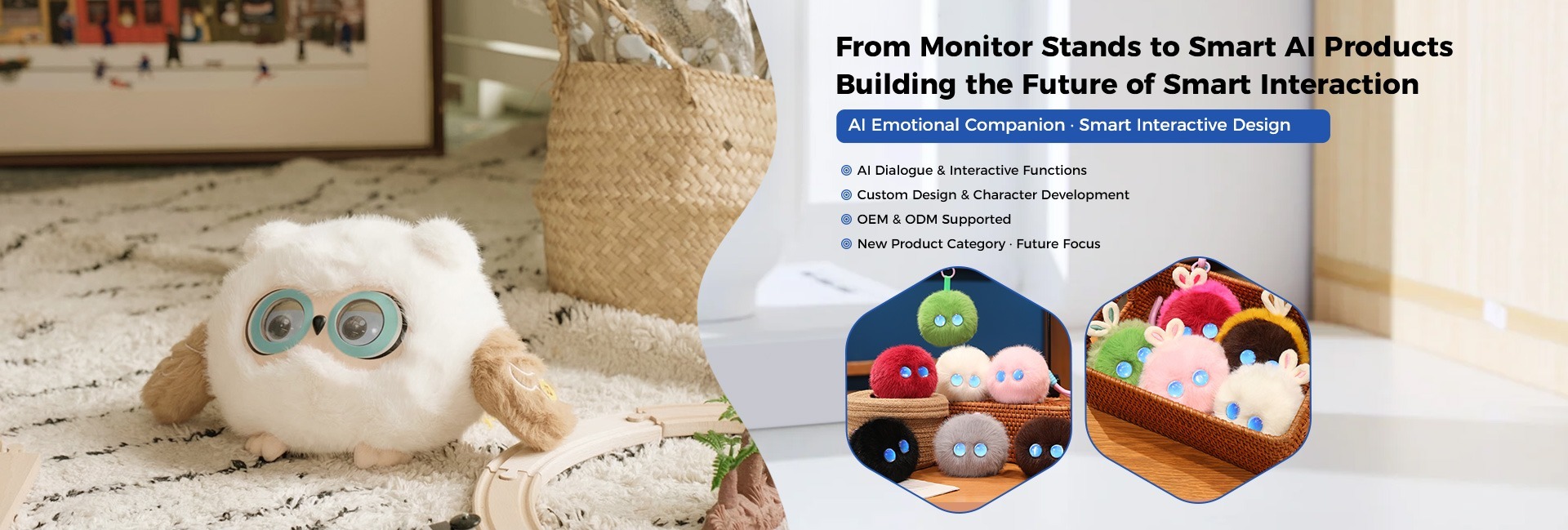
From edge-cloud multilingual NLP pipelines and beamforming microphone acoustic chambers to drop-tested plush mechatronics: discover how Suzhou ESPS Technology Co., Ltd. builds certified conversational AI companions tailored to European, North American, and Asian educational markets.
Factory premises, automated sewing, PCB mounting, and testing floors inspected onsite in Zhangjiagang, Jiangsu.
Hybrid edge-caching and local intent mapping eliminate the dead silence that ruins conversational immersion for young learners.
Hardware-level microphone isolation and vector-only transmission strictly compliant with COPPA, GDPR-K, and EU AI Act directives.
Full laboratory testing support for EN71 Parts 1-3, ASTM F963, CE RED 2014/53/EU, FCC Part 15, and RoHS 2.0.
Global B2B procurement of interactive educational hardware has moved far beyond simple recorded audio chips. Importers, edtech brands, and mass retailers are now managing complex trade-offs between cloud API operational costs, child speech recognition accuracy, and regional regulatory enforcement.
Early iterations of conversational toys relied exclusively on third-party cloud LLM APIs. For commercial brand owners and importers, this created significant cost risks: recurring monthly API token expenses eroded profit margins, while unpredictable Wi-Fi packet drops generated unacceptably long response latencies (often exceeding 2.5 seconds), immediately disengaging toddlers and young students.
Savvy retail buyers are actively procuring toys equipped with dual-core neural processing units (NPUs) or low-power digital signal processors (DSPs). By handling local keyword spotting, phoneme recognition, and elementary vocabulary drills directly on the device, the toy achieves responsive, instantaneous feedback (sub-400ms) with zero cloud overhead. Cloud connectivity is reserved strictly for complex storytelling and creative conversational branches, slashing active token consumption by up to 68%.
Customs officials and consumer protection watchdogs in the United States and the European Union have placed connected interactive toys under intense regulatory scrutiny. Products that record and transmit raw ambient child audio to remote servers risk catastrophic recall actions, heavy regulatory fines, and reputational damage under COPPA (Children's Online Privacy Protection Act) and GDPR-K.
At Suzhou ESPS Technology Co., Ltd., our engineering protocol incorporates physical microphone disconnects, local audio feature vectorization, and cryptographic session isolation. Raw voice clips are processed into mathematical vectors inside the local DSP and instantly purged from memory. Only non-biometric text tokens travel across TLS 1.3 encrypted sockets to zero-retention enterprise endpoints. Procurement departments receive complete technical documentation to satisfy retailer compliance auditors.
Developing custom tooling and obtaining radio frequency (RF) and toy safety certifications for individual toy SKUs involves substantial capital expenditure. Forward-thinking distributors and toy brands are adopting modular hardware platforms: a standardized, pre-certified "Smart AI Core Pod" that can be inserted into multiple plush or vinyl exterior shells.
This procurement model allows clients to launch diverse character lines—such as conversational bunny plushies, friendly monsters, or educational bears—while leveraging a single certified motherboard, battery assembly, and FCC/CE RED approval file. It dramatically reduces initial tooling commitments, simplifies inventory management, and accelerates time-to-market for seasonal product refreshes.
Standard commercial Automatic Speech Recognition (ASR) engines fail consistently when processing young children due to fundamental acoustic differences: higher fundamental pitch (F0), irregular sentence syntax, prolonged vowels, and developing phonological articulation. Standard adult speech models yield word error rates (WER) exceeding 45% when applied to young learners, causing widespread frustration.
Our R&D engineering specifically optimizes the acoustic front-end (AFE) with dual-beamforming MEMS microphones and specialized child phoneme training weights. Whether an ESL student speaks English with a Spanish, Mandarin, Japanese, or French regional accent, the language learning AI toy dynamically normalizes acoustic variations, providing encouraging, pedagogically validated pronunciation corrections.
Building an interactive Language Learning AI Toy requires the seamless synthesis of acoustic physics, mechanical dampening, low-power microelectronics, and generative AI alignment.
Acoustic Isolation Inside Soft Plush Housings: Integrating a speaker diaphragm, a vibrating resonance chamber, and sensitive MEMS microphones inside the soft stuffing of a plush toy represents a major mechanical challenge. Poor engineering causes physical feedback loops, internal acoustic resonance, and muffled sound output that destroys speech intelligibility.
Suzhou ESPS Technology Co., Ltd. solves this via custom-molded acoustic pods sealed with high-density ABS resin and isolated with silicone shock mounts. The sound cavity is physically separated from plush polyester fill, preventing acoustic leakage and dampening motor vibration during interactive movements. The result is crystal-clear phonics output and crisp voice pick-up up to 3 meters away.
Expressive Multi-Modal Feedback: Pure audio toys often feel like detached smart speakers. Next-generation language companions integrate dynamic TFT/OLED or animated LED matrix expression eyes, synchronized mouth movement, and capacitive touch sensors located in the paws, tummy, and ears. When a child pronounces a target vocabulary word correctly, the toy responds not just with spoken praise, but with joyful eye animations and tactile feedback, reinforcing neurological learning pathways.
Long-Term Conversational Memory: Modern educational toys maintain contextual continuity across multiple play sessions. Utilizing lightweight vector databases, the companion remembers the child's name, preferred story themes, mastered vocabulary sets, and persistent pronunciation challenges, seamlessly resuming conversational lessons without repetitive introductions.
| Architectural Dimension | Legacy Talking Toys (2015–2022) | First-Gen Cloud Toys (2023–2024) | ESPS Next-Gen Hybrid Architecture (Current) |
|---|---|---|---|
| Speech Recognition | Fixed keyword audio chips (10-30 words) | Generic adult cloud speech-to-text API | Specialized child acoustic model + edge DSP beamforming |
| Response Latency | Instant (<200ms) but strictly pre-recorded | High & variable (1800ms - 3500ms) | Ultra-fast hybrid (<650ms end-to-end response) |
| Language Adaptability | Static ROM; requires hardware re-masking | Multi-language cloud parsing only | OTA multi-language firmware + contextual ESL scaffolding |
| Child Privacy Protection | No connectivity (safe but non-interactive) | Continuous raw voice streams sent to cloud | Zero-voice retention, local tokenization, TLS 1.3 encrypted |
| Conversational Depth | Monologue playback; no real dialogue | Unconstrained LLM with hallucination risks | Curated educational guardrails + dynamic multi-turn memory |
| Operating API Costs | Zero recurring costs | High token fees per minute of conversation | Optimized edge-routing cutting cloud token costs by up to 68% |
Factory-engineered companion robots and interactive plush models available for turnkey private labeling, custom voice model flashing, and bespoke shell manufacturing.
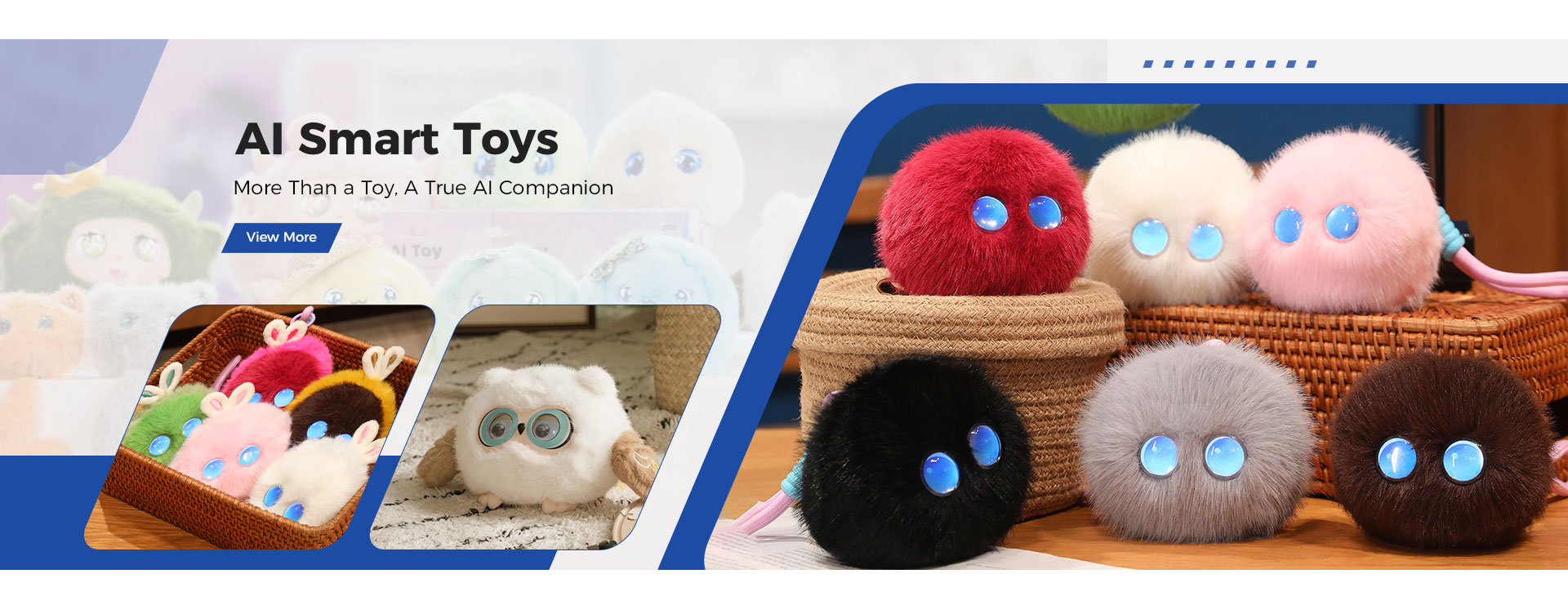
Soft plush companions engineered with internal acoustic chambers, multi-microphone beamforming, and embedded interactive phonics tutors designed specifically for ESL learners and multilingual households.
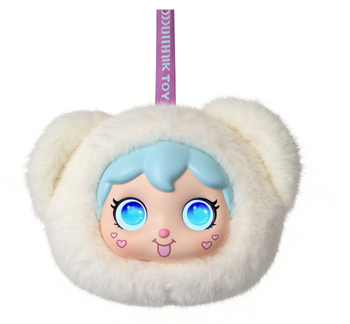
Polyester Plush / Embedded DSP / 18.5 cm
Identifies student faces to maintain individualized vocabulary learning records and personalized language progress.
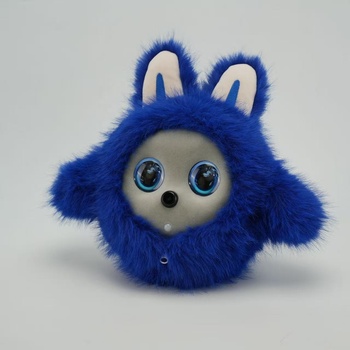
Model: RG-AI-K01 · Dual-Mic System
Gentle companion tuned for early phonetic repetition, rhyming word games, and adaptive bedtime bilingual storytelling.
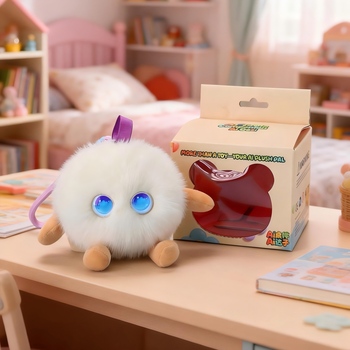
Model: RG-AI-FZ3 · Edge Speech Edition
Compact spherical form factor featuring responsive LED emotional feedback that reinforces foreign language pronunciation cues.
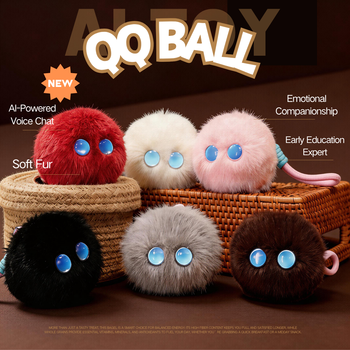
Interactive Scenario-Based Dialogue
Roleplay-driven conversation simulating real-life vocabulary: grocery shopping, family routines, and greeting etiquette.
Need your own proprietary language learning pedagogy flashed onto certified hardware? Our turnkey engineering team provides complete support across every development stage:
Suzhou ESPS Technology Co., Ltd. was established in 2010 in Zhangjiagang, Jiangsu Province. What began as a high-precision hardware and mounting engineering enterprise has evolved into a premier vertically integrated manufacturer of smart companion robots and Language Learning AI Toys.
Unlike conventional plush toy factories that outsource electronic development to third-party brokers, ESPS manages mechanical precision, acoustic isolation, firmware compilation, and final plush assembly directly within our verified production ecosystem. Our 6,000+ square meter facility is audited onsite by SGS Group, giving international retailers, importers, and educational brands complete supply chain transparency.
By controlling both the physical shell stitching and the sensitive electronics assembly under strict ISO 9001, ISO 14001, and OHSAS 18001 management protocols, we eliminate the communication friction and component mismatch that cause smart toy projects to fail.
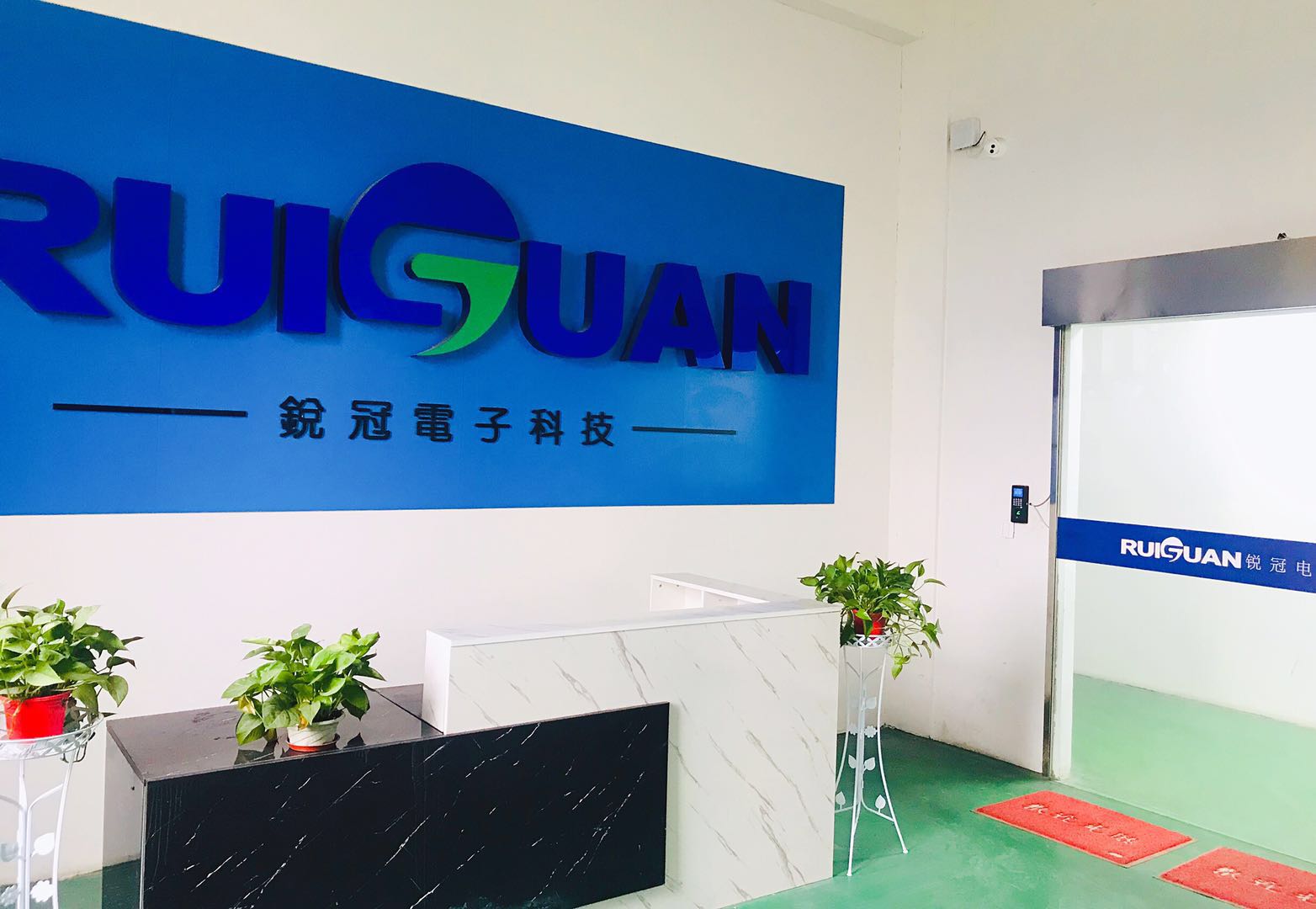
Examine our real production lines, electronic quality testing stations, and sample fabrication workshops. Click any photo to view enlarged details.
Because Language Learning AI Toys combine high-frequency microprocessors, lithium polymer batteries, wireless antennas, and soft textiles, our quality assurance protocols cover both electronic and toy physical safety.

Our facility has passed rigorous on-site audit verification by SGS Group, confirming trade capacity, manufacturing precision, and QA engineering standards.




Before issuing purchase orders for voice-interactive educational toys, verify these technical parameters with your manufacturer to prevent costly customs detentions and market recalls:
Practical, engineering-grade answers addressing the technical, legal, and logistical considerations of sourcing Language Learning AI Toys.
Contact the engineering and export division at Suzhou ESPS Technology Co., Ltd. Send us your target age range, language pairs, certification requirements, or custom character artwork. Our engineers will provide a technical feasibility evaluation, bill-of-materials breakdown, and functional prototype proposal within 48 hours.
