The 2026 wholesale market for AI toys is becoming more practical, selective, and demanding. Buyers are no longer impressed by flashing lights alone. They want toys that encourage curiosity, conversation, creativity, and safe discovery.
Mitchel Resnick, LEGO Papert Professor of Learning Research at MIT, once said, “The best way to become a better learner is to become a better designer.” His idea remains highly relevant to AI toys. A strong product should let children build, test, adjust, and imagine. It should not simply answer every question for them.
This guide examines ten AI toys suitable for wholesale sourcing in 2026. Each option is considered through several business and user-focused details. These include educational value, age suitability, voice interaction, data protection, material quality, battery performance, packaging, and expected retail appeal. A toy may look exciting on a trade-show shelf, yet perform poorly after repeated use. That happens.
Real testing matters.
Wholesalers should also inspect privacy settings, parental controls, software updates, and customer support. These details can affect returns and long-term trust. Some products may offer impressive artificial intelligence but lack durable buttons or clear instructions. Others may be simpler, but more reliable for everyday family use.
The selection is not perfect. Technology changes quickly, and children’s needs vary widely. Still, these ten AI toys offer useful starting points for retailers seeking engaging, responsible, and commercially realistic products. Safety documentation should always be reviewed before placing a wholesale order.
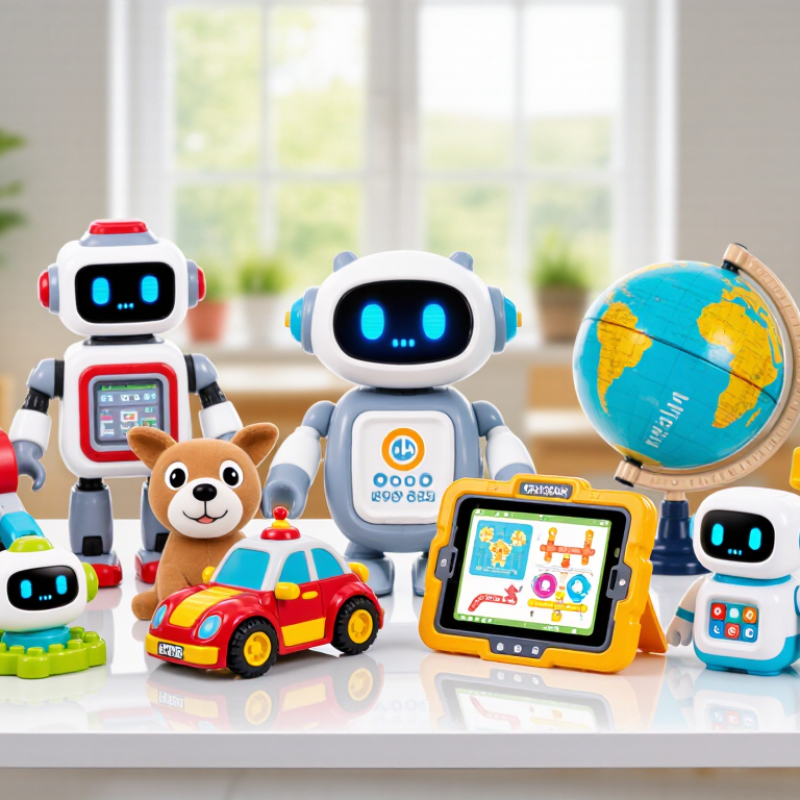
In 2026, wholesale buyers should treat AI toys as several categories, not one fast-moving shelf. Educational coding robots remain practical for schools and families. Small programmable vehicles offer visible movement, simple controls, and easier demonstrations. Conversational learning toys support language practice and question-based discovery. Grand View Research’s Artificial Intelligence Market Size report projects strong double-digit annual growth for AI through 2030. That momentum supports wider toy adoption, but demand forecasts can look better than real shelf performance. Keep hardware repairable.
Creative storytelling kits can combine voice prompts, drawing, and short animations. They suit gift stores because one product serves several play styles. Adaptive learning devices may attract parents seeking personalised practice in mathematics or reading. However, age suitability, offline functions, and parental controls must be clear on the packaging. The Toy Association’s 2024 industry research identified learning, creativity, and technology as continuing purchase drivers. Circana reported a 1% decline in global toy sales value during 2024, making inventory discipline important. Wholesale buyers should test small quantities before expanding. A colourful prototype may impress buyers but disappoint children after ten minutes. Privacy handling also deserves careful review, especially when toys use microphones, cameras, or cloud services. Human guidance still matters.
When evaluating AI-powered kids’ toys for wholesale, safety should guide every purchasing decision. Check age suitability, rounded edges, strong battery covers, and washable surfaces. A toy should survive drops from a low table. Small parts remain a serious concern for younger children.
AI features need practical value, not decorative technology. Look for clear voice recognition, adjustable volume, and responses suited to a child’s age. Reliable toys should offer parental controls, offline play, and transparent data handling. Microphones and cameras require special attention. Buyers should ask where recordings are stored and how adults can delete them. Demonstration units can reveal delays, confusing answers, or poor pronunciation.
Educational quality also matters. A good toy encourages storytelling, problem-solving, movement, or language practice. It should not keep children passively tapping a screen. Wholesale buyers can test ten-minute play sessions and observe whether children remain curious. Durability, charging time, repair options, and packaging affect long-term value. Clear instructions help families use the product responsibly.
No checklist is flawless. I once valued impressive conversation skills over simple physical durability, and that was a poor judgment. A clever toy becomes useless when its charging port breaks quickly. Independent testing reports, supplier documentation, and sample inspections offer stronger evidence than promotional claims. Retailers should also confirm return procedures before placing large orders.
| Rank | AI Toy Category | Recommended Age | Core AI Capability | Key Features to Evaluate | Learning and Play Value | Safety and Privacy Checks | Typical Battery Life | Indicative Wholesale Price* | Typical MOQ* | Wholesale Suitability Score |
|---|---|---|---|---|---|---|---|---|---|---|
| 1 | AI Storytelling Companion | 3–8 years | Voice recognition, conversational response, adaptive story generation | Child-safe content filters, adjustable speaking speed, multilingual audio, offline story library, volume limiter | Builds listening comprehension, vocabulary, imagination, and independent play habits | Check microphone indicator, parental consent controls, deletion of voice data, secure account access, and applicable toy-safety testing | 6–10 hours of active use | US$18–35 per unit | 100–500 units | 9.2/10 |
| 2 | AI Coding Robot | 6–12 years | Natural-language command interpretation, block-code assistance, obstacle response | Scratch-compatible programming, visible sensors, progressive coding levels, rechargeable battery, durable wheels | Introduces sequencing, logic, debugging, problem solving, and STEM concepts | Check edge protection, motor temperature, battery certification, firmware update security, and age-appropriate instructions | 3–6 hours of active use | US$28–65 per unit | 100–300 units | 9.1/10 |
| 3 | AI Drawing and Art Tablet | 4–10 years | Image recognition, guided drawing feedback, shape and color suggestions | Pressure-sensitive stylus, low-latency display, age-based prompts, export restrictions, screen-time controls | Develops fine motor coordination, visual thinking, creativity, and early design skills | Check screen brightness limits, rounded edges, stylus durability, child data settings, and parental control access | 5–8 hours of active use | US$22–48 per unit | 100–500 units | 8.8/10 |
| 4 | AI Language Learning Pen | 3–9 years | Speech recognition, pronunciation comparison, vocabulary personalization | Replaceable content cards, clear pronunciation scoring, multiple language packs, tactile buttons, offline operation | Supports phonics, pronunciation, vocabulary retention, and basic conversational practice | Check audio volume control, non-toxic materials, removable battery protection, data minimization, and content accuracy | 8–15 hours of active use | US$10–25 per unit | 200–1,000 units | 8.7/10 |
| 5 | AI Educational Quiz Console | 5–12 years | Adaptive question selection, answer analysis, personalized difficulty | Curriculum-aligned question bank, instant feedback, parental progress reports, offline mode, durable controls | Reinforces mathematics, science, language, memory, and general knowledge through short activities | Check advertising restrictions, account permissions, child-friendly interface, secure wireless connection, and educational content review | 4–8 hours of active use | US$20–45 per unit | 100–500 units | 8.6/10 |
| 6 | AI Interactive Plush Toy | 3–8 years | Voice interaction, emotion-aware responses, routine-based personalization | Washable outer cover, removable electronics module, soft construction, response-time control, parent-approved content modes | Encourages storytelling, emotional expression, role play, and social communication | Check small-part risks, seam strength, washable design, microphone privacy switch, and restrictions on behavioral profiling | 5–12 hours of active use | US$16–38 per unit | 200–800 units | 8.5/10 |
| 7 | AI Science Exploration Kit | 7–14 years | Image and object recognition, experiment guidance, data interpretation | Safe experiment materials, step-by-step prompts, sensor support, measurement logging, teacher or parent mode | Builds observation, hypothesis testing, measurement, scientific reasoning, and project skills | Check chemical and component safety, supervision requirements, sensor accuracy, battery protection, and clear hazard labeling | 4–7 hours of active use | US$30–75 per unit | 50–300 units | 8.4/10 |
| 8 | AI Music and Rhythm Pad | 4–12 years | Beat matching, tempo adaptation, melody generation, performance feedback | Pressure-sensitive pads, latency below 50 ms, built-in sound library, recording limits, headphone support | Supports rhythm, coordination, auditory memory, creativity, and collaborative music play | Check maximum sound output, headphone volume controls, non-slip materials, charging safety, and recording permissions | 4–8 hours of active use | US$18–42 per unit | 100–500 units | 8.3/10 |
| 9 | AI Puzzle and Logic Board | 5–12 years | Move recognition, difficulty adjustment, hint generation, solution analysis | Physical pieces with magnetic or optical detection, progressive challenges, hint limits, compact storage, offline play | Improves spatial reasoning, planning, memory, pattern recognition, and persistence | Check magnet strength and accessibility, piece size, pinch points, material safety, and absence of unnecessary data collection | 10–20 hours of active use | US$14–32 per unit | 200–1,000 units | 8.2/10 |
| 10 | AI Camera Learning Toy | 6–12 years | Object, color, and text recognition with educational explanations | Physical privacy shutter, restricted image storage, simple controls, impact-resistant casing, offline recognition options | Encourages observation, vocabulary building, visual literacy, and real-world exploration | Check camera indicator, image-retention settings, cloud-processing consent, location-data controls, and secure software updates | 3–6 hours of active use | US$25–60 per unit | 100–500 units | 8.0/10 |
For AI toys entering wholesale in 2026, safety begins with the physical product. The U.S. Consumer Product Safety Commission reported 231,700 toy-related emergency injuries among children under 15 in 2023. Small detachable parts, loose batteries, and sharp edges deserve strict inspection. Suppliers should request age-based testing records, material declarations, and clear warnings before placing toys in cartons. A colorful box is not proof of safety.
Privacy requires equal attention. A toy with a microphone, camera, or voice assistant may collect a child’s voice, habits, or location clues. UNICEF’s Policy Guidance on AI for Children identifies safety, privacy, transparency, and accountability as core principles. Wholesale buyers should check whether data collection is necessary, encrypted, limited, and deleted on schedule. Ask who can access recordings. Ask again.
Age labels can still mislead. A toy designed for a six-year-old may demand reading skills, impulse control, or online supervision. That mismatch is easy to miss during a fast product review. I would test each device with children and caregivers, while documenting consent and observed risks. Some evaluation notes may look untidy. They are still valuable. A responsible buying file should include firmware update rules, parental controls, offline functions, and a clear process for reporting harmful outputs.
Wholesale AI toys for kids require more than an attractive product page. Buyers should compare unit prices, order quantities, shipping costs, and support terms together. Basic interactive toys may cost 8 to 18 dollars per unit at wholesale. Advanced learning devices can exceed 30 dollars. Prices often fall after 500 units, but cash flow becomes tighter.
Minimum order quantities vary widely. A small supplier may accept 50 units for a trial order. Larger factories may require 500 or 1,000 units. Ask whether mixed colors or models count toward the minimum. This detail can protect a new retailer from holding slow-moving stock. Request samples before placing a full order. Test voice recognition, battery life, volume control, and app stability in real homes.
Supplier selection needs practical evidence. Check factory experience, child-safety test reports, material specifications, warranty procedures, and replacement policies. Confirm how the toy handles recorded voices or collected information. Documentation should match the destination market, not merely show a generic certificate. My early sourcing mistake was trusting polished videos too quickly. A quiet sample test revealed delayed responses and weak packaging. That changed my process. I now score suppliers on communication speed, sample quality, production consistency, and after-sales support. A lower price is not always a lower cost.
Indicative wholesale pricing and minimum order quantities by product category
The chart compares typical wholesale unit-price ranges and minimum order quantities for popular AI-enabled children’s toy categories in 2026. Lower minimum orders can reduce inventory risk, while higher-priced products may require stronger quality control, safety testing, and supplier verification before purchase.
AI toys are moving from novelty products to practical learning tools in 2026. Retailers now seek toys that support conversation, creativity, coding, and problem-solving. Parents also expect clear privacy controls, durable materials, and age-appropriate design. The strongest wholesale products combine helpful AI features with simple physical play. That balance matters.
Market demand is growing, but buyers are becoming more careful. A toy that answers questions quickly may still fail if children lose interest after one week. Retailers can test small quantities before placing larger wholesale orders. Observe which features children use repeatedly, such as voice guidance, story creation, or interactive puzzles. Sales data should be reviewed beside customer feedback, not alone. Some forecasts may be wrong. That is normal in a young category.
Tips: Ask suppliers for safety documents, software update policies, battery details, and data-handling information. Check whether controls are easy for parents to understand. Compare packaging, warranty support, and replacement procedures before negotiating prices. Seasonal displays can group products by learning goal, age range, or play style. Demonstration units may improve customer confidence, especially when shoppers can see a child complete a short activity. Avoid choosing only the cheapest item. Low quality can create returns and damage trust. Test before scaling.
Ask for age-based testing records, material declarations, battery details, and clear warning labels. Inspect detachable parts, loose batteries, and sharp edges. A colorful package proves nothing.
Microphones, cameras, and voice features may collect voices, habits, or location clues. Confirm that data collection is necessary, encrypted, limited, and deleted on schedule. Ask who can access recordings.
Ask what data the toy collects, where it goes, and how long it remains stored. Check access controls and deletion procedures. Ask again.
Not always. A toy marked for six-year-olds may require reading skills, impulse control, or online supervision. Test it with children and caregivers when possible.
Conversation, creativity, coding, problem-solving, interactive stories, and puzzles show practical appeal. Simple physical play should remain part of the experience. Screen-heavy designs may lose attention.
Start with a small quantity and observe repeated use over several days. Compare sales data with customer comments. A child may enjoy one demonstration, then ignore the toy later.
Record firmware update rules, parental controls, offline functions, and harmful-output reporting steps. Test whether parents understand the controls without technical help. Notes may look untidy.
Use a demonstration unit and show a short activity, such as completing an interactive puzzle. Group products by age, learning goal, or play style. The cheapest option may create costly returns.
This guide explores the 10 best AI toys for kids wholesale in 2026, focusing on product categories with strong retail potential, including interactive learning toys, voice-enabled companions, coding kits, smart puzzles, and creative activity sets. It explains how to evaluate important features such as age-appropriate interaction, educational value, reliable performance, durable construction, easy controls, and responsible use of AI. The goal is to help wholesalers select products that are engaging, practical, and suitable for different customer groups.
The article also highlights safety, privacy, and age-appropriateness standards, including secure data practices, parental controls, transparent product information, and responsible content design. It reviews wholesale pricing, minimum order quantities, supplier reliability, quality assurance, and after-sales support. Finally, it discusses 2026 market trends and retail opportunities, showing how AI toys can support personalized learning, imaginative play, and differentiated product offerings while meeting the expectations of parents, retailers, and educators.