Precision Robotic & Interactive AI Hardware
Pre-engineered, field-validated drawing robot and interactive robotic companion platforms ready for custom shell tooling, multilingual voice localization, and firmware mapping.

RG-AI-K01 Smart AI Robot Pet Bunny Plush with Voice Control and Interaction

RG-AI-K01 New Design AI Robot Companion Bunny Plush Toy for Toddlers Learning

Hot Selling RG-AI-K01 AI Robot Pet Soft Bunny Plush with Intelligent Voice Interaction

RG-AI-K01 AI Robot Companion Bunny Plush with Intelligent Voice Recognition

RG-AI-K01 Smart AI Robot Companion Bunny Plush Doll with Large Ears for Girls Gift

RG-AI-K01 Smart Robot AI Bunny Plush Toy for Children Early Learning and Gifts

RG-AI-K01 Smart AI Mini Robot Bunny Plush Toy with Intelligent Dialogue and Interaction

RG-AI-K01 Top Ranking AI Educational Robot Bunny Plush Toy with Smart Learning Mode
Mechatronic Architecture of Children's Drawing Robots
A rigorous examination of closed-loop motion kinematics, computer vision recognition modules, and screen-free pedagogical engineering for the global B2B procurement sector.
Dual-Axis Stepper & Arm Kinematics
Unlike basic toy motors that drift over extended cycles, professional OEM drawing robots employ dual closed-loop micro-steppers integrated with planar polar-to-Cartesian linkage mechanics. This architecture preserves repeat positioning accuracy under ±0.15 mm across paper surfaces up to A4 dimensions, ensuring reproducible vector illustrations.
Optical Card & Stroke Recognition
Equipped with wide-angle high-speed CMOS optical sensors, the system performs instantaneous offline computer vision analysis on pedagogical flashcards. Cards embedded with proprietary 2D vector patterns or dot-matrices trigger step-by-step robotic sketching sequences accompanied by synchronized phonetic verbal prompts without requiring internet connectivity.
Screen-Free Montessori Calibration
Educational policy shifts across the European Union and North America strongly favor screen-free developmental toys that mitigate digital eye strain while building hand-eye coordination. Our firmware modulates stroke speed and introduces deliberate pedagogical pauses, giving early learners sufficient time to replicate lines, geometric forms, and letters.
Subsystem Integration: Pen Lift Dynamics and Surface Friction Normalization
In high-speed robotic drawing applications, variable mechanical drag caused by different paper grain weights and marker tip compressions often leads to skipped steps or distorted curves. ESPS integrates spring-damped micro-solenoids and custom PWM-driven pen-lift mechanisms that maintain steady normal downforce (0.8N to 1.2N). This ensures clean, continuous ink flow without gouging paper surfaces or causing thermal runaway on internal driver stages.
On the embedded logic layer, drawing routines are parsed through low-overhead G-code interpreters operating on 32-bit ARM Cortex-M architecture. By breaking down curved splines into micro-vectors through real-time interpolation, the robotic mechanism delivers natural, organic line weight without the typical stepping artifacts associated with low-cost consumer toys.
| Engineering Parameter | Commercial Consumer Grade | ESPS Industrial Turnkey OEM Specification | Procurement Advantage |
|---|---|---|---|
| Drive Actuation Core | Open-loop DC motor with nylon gears | Dual closed-loop micro-steppers with POM helical gear train | Zero backlash; ±0.12 mm line repeatability |
| Vision Sensor Module | Basic 0.3 MP sensor requiring bright lighting | Wide-angle CMOS with integrated infrared auxiliary fill light | Accurate card reads across 50–1200 lux conditions |
| Pen Lift Mechanism | Rigid mechanical cam with noisy drop | Damped PWM micro-solenoid with variable force dampener | Sub-35dB acoustic noise profile; prevents paper tearing |
| Curriculum Upgradability | Fixed ROM chip (one-time factory program) | MicroSD / SPI Flash expansion + firmware update over USB-C | Allows annual expansion packs & regional localization |
| Battery & Power Circuit | Non-certified 18650 cell without BMS | UN38.3 & IEC 62133 certified Li-Po with dual OVP/OCP/NTC | Direct air/sea freight clearance without hazmat delays |
Drawing Robot Procurement Trends (2025–2030)
How leading toy brands, educational publishing houses, and international retail chains are structuring their smart drawing and STEM product roadmaps.
Offline AI Edge Inference
Due to strict international privacy mandates including the US Children's Online Privacy Protection Act (COPPA) and the EU General Data Protection Regulation (GDPR-K), institutional buyers reject cloud-connected microphones and cameras in early-childhood toys. Sourcing is pivoting to ultra-low-power offline edge chips executing TinyML models directly on local silicon.
Eco-Circular Materials & PCR Resins
Major European mass retailers now request post-consumer recycled (PCR) ABS plastic formulations (30% to 75% recycled resin content) along with bio-based colorants. Mechanical mold engineering must account for differential resin shrinkage while passing stringent EN 71-1 torque, tension, and drop impact criteria.
Multilingual Phonics & Localization
Global brands demand modular audio stacks. Instead of single-language firmware, buyers need single SKU designs capable of housing Spanish, French, German, Japanese, and Arabic voice assets switchable via hardware toggles or localization flashcards, dramatically reducing warehouse SKU overhead.
Suzhou ESPS Technology Co., Ltd.
Founded in 2010 in Fenghuang Town, Zhangjiagang, Jiangsu, Suzhou ESPS Technology has spent 16 years building precision mechatronics, robotic control hardware, and smart interactive consumer devices. As an SGS Onsite Verified Custom Manufacturer, our facility integrates industrial hardware tooling, cleanroom electronics assembly, and automated QA calibration under a unified ISO quality governance model.
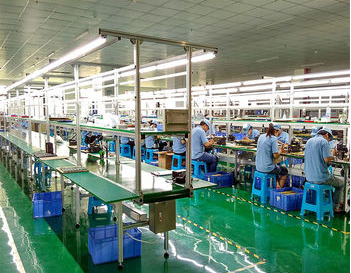
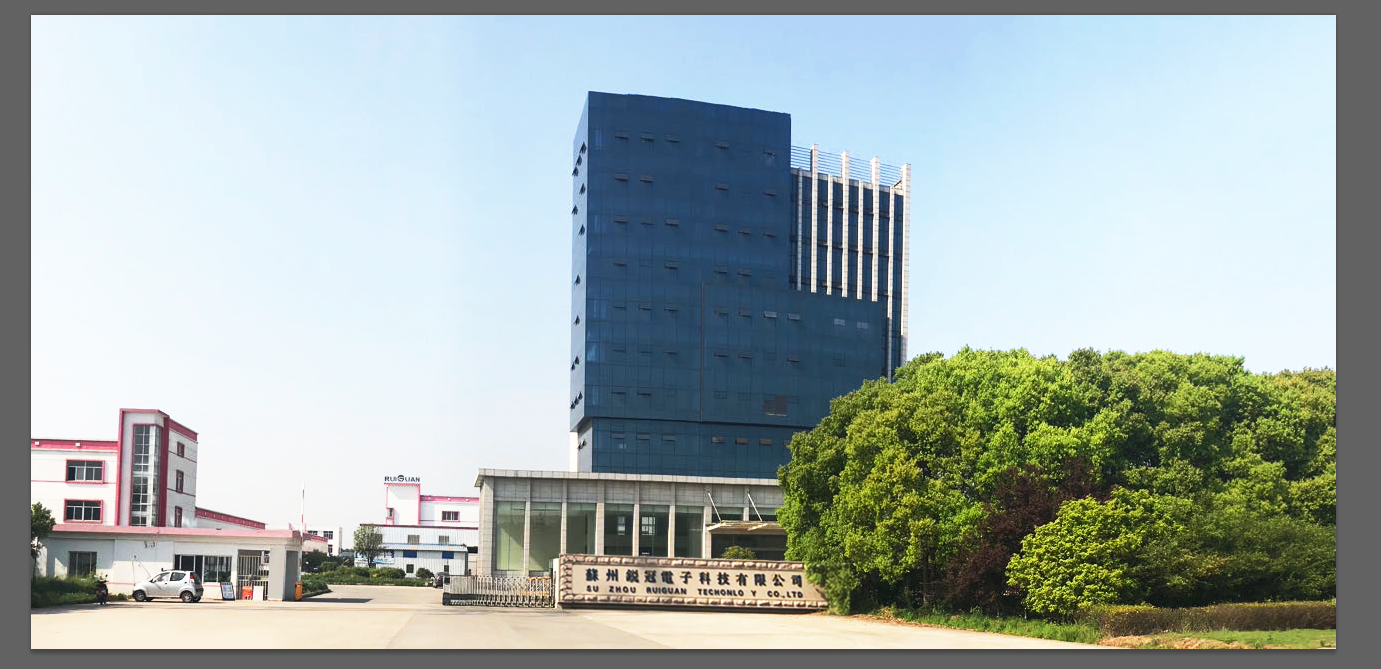
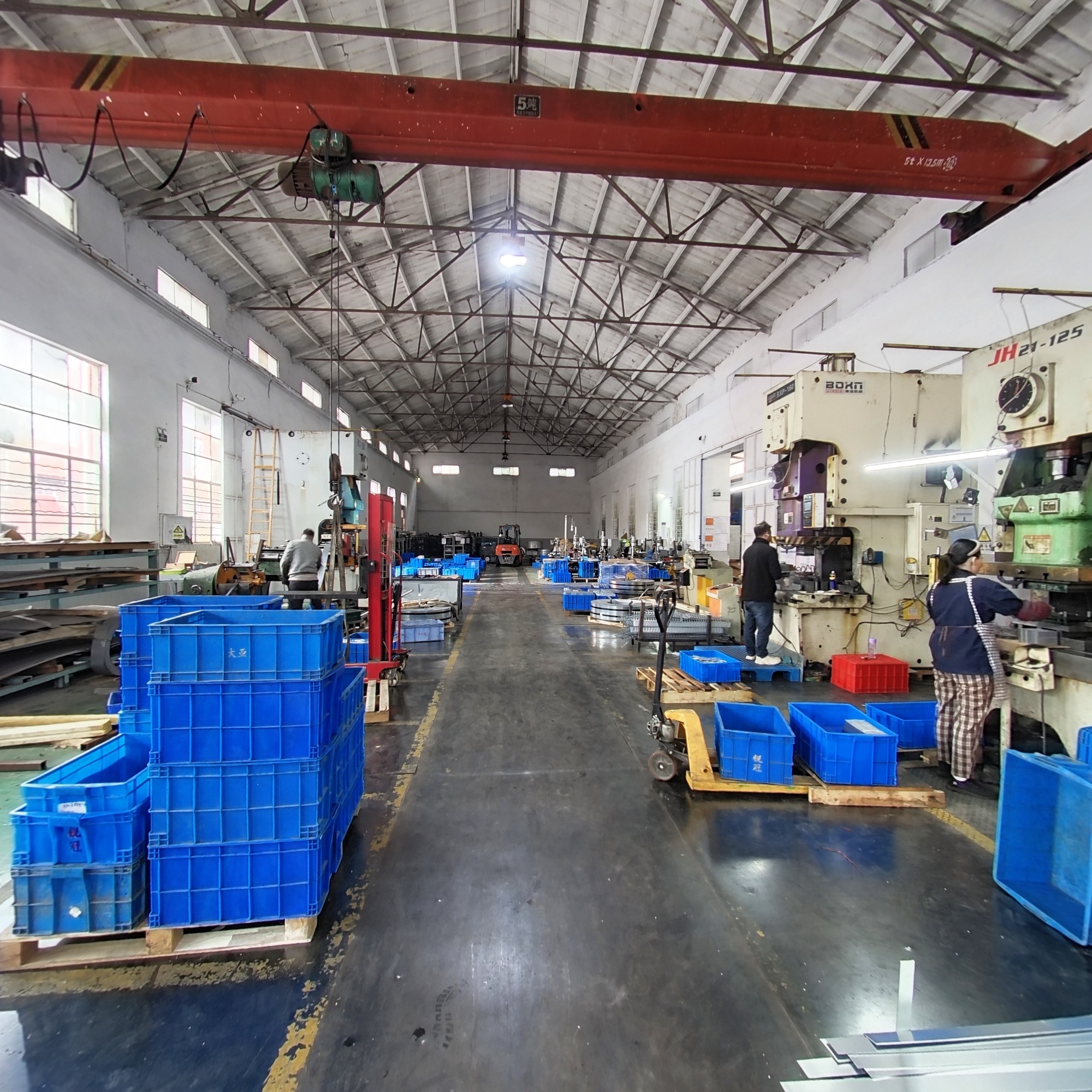

SGS Onsite Verified Custom Manufacturer
Audited facility footprint, technical staff count, QA workflows, and export transaction records.
 EN71 Part 1-3
 CE (EMC / RED)
 FCC Part 15B
 RoHS 2.0 / REACH
OEM/ODM Turnkey Execution Architecture
A proven, audit-proof product lifecycle model developed over 16 years to mitigate tooling risk, firmware bugs, and customs clearance bottlenecks.
Industrial & Mechanical Design
Parametric 3D CAD modeling, draft angle optimization for injection molding, pen socket ergonomics, and structural drop-simulation testing according to ASTM F963 standards.
Embedded PCB & Optics Tuning
Custom PCB layout utilizing multi-layer SMT processing, optical camera lens aperture calibration, audio amplifier noise suppression, and power path optimization.
Curriculum & Card Digitization
Vector curve plotting, card illustration engraving, multilingual studio voice recording, and algorithmic coordinate compression for rapid flash execution.
Dual-Stage QC & Global Delivery
100% incoming raw material inspection, finished-goods coordinate accuracy validation, drop testing, and DDP/FOB logistics execution across 5 global regions.
Frequently Asked Questions by B2B Importers
Technical, regulatory, and commercial answers addressing common international sourcing inquiries.
