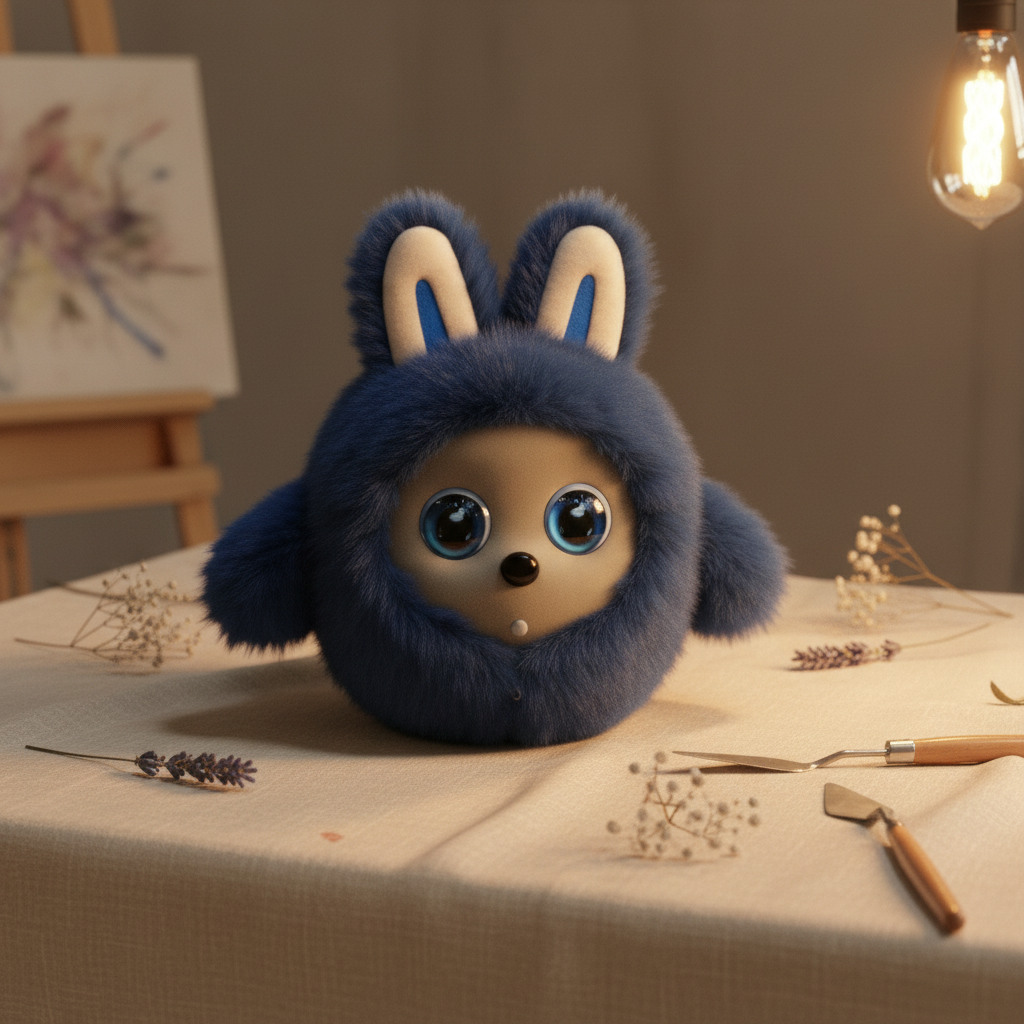
RG-AI-K01 Smart Robot AI Bunny Plush Toy for Children Early Education
- Latency<750ms
- ProcessingDual-Core NPU + Cloud LLM
- ComplianceEN71, CE, FCC, RoHS
Pre-engineered smart robotic architectures ready for proprietary brand casing, linguistic model fine-tuning, and global deployment with rapid prototyping starting from 1 unit.
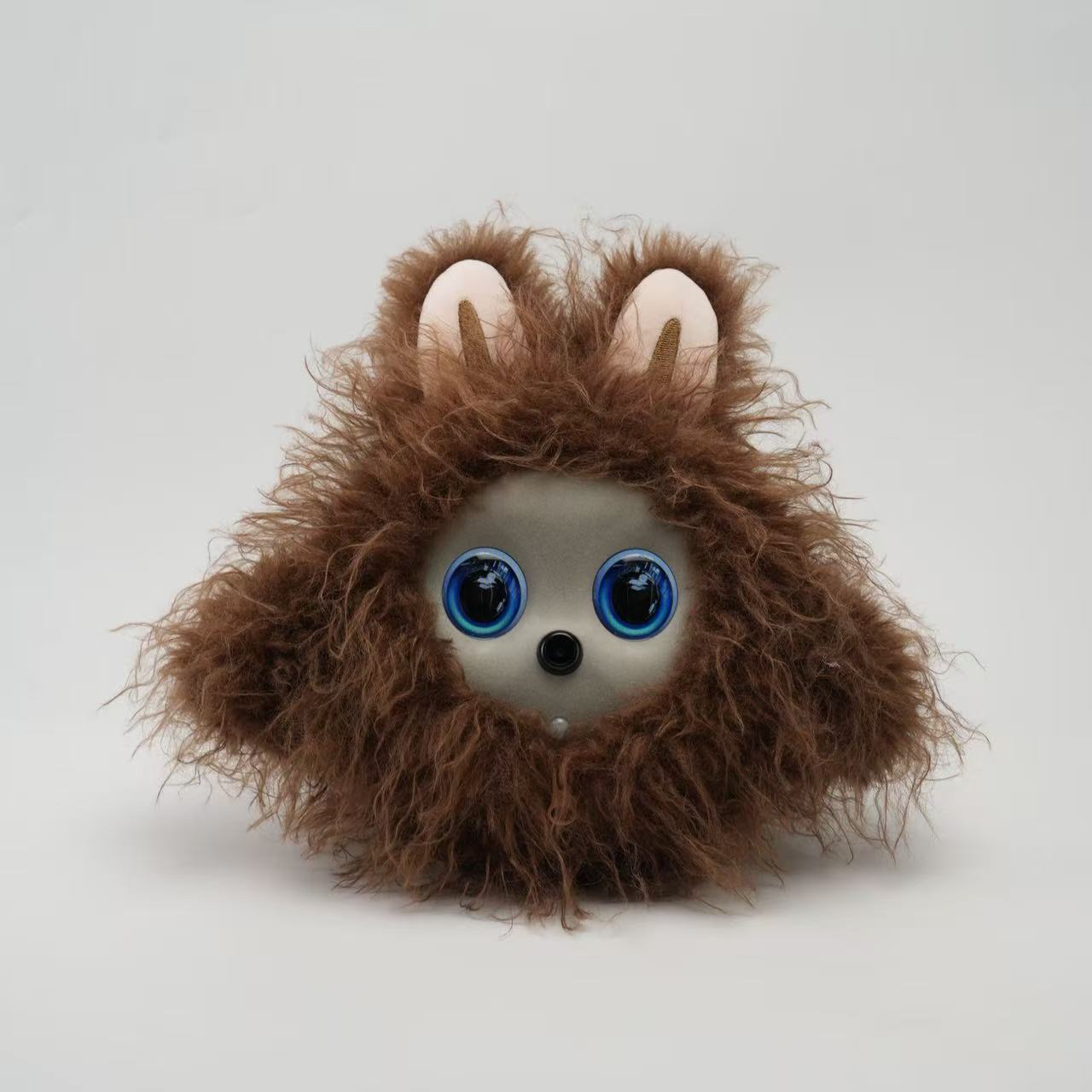
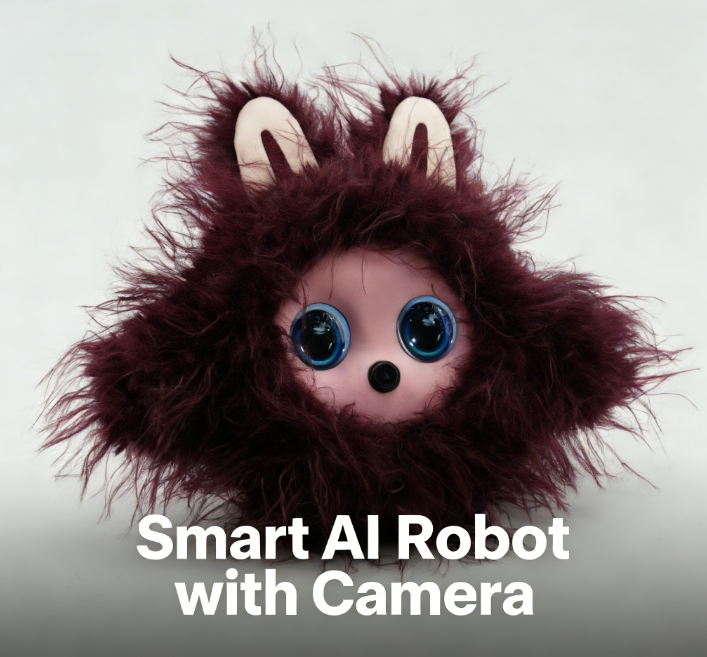
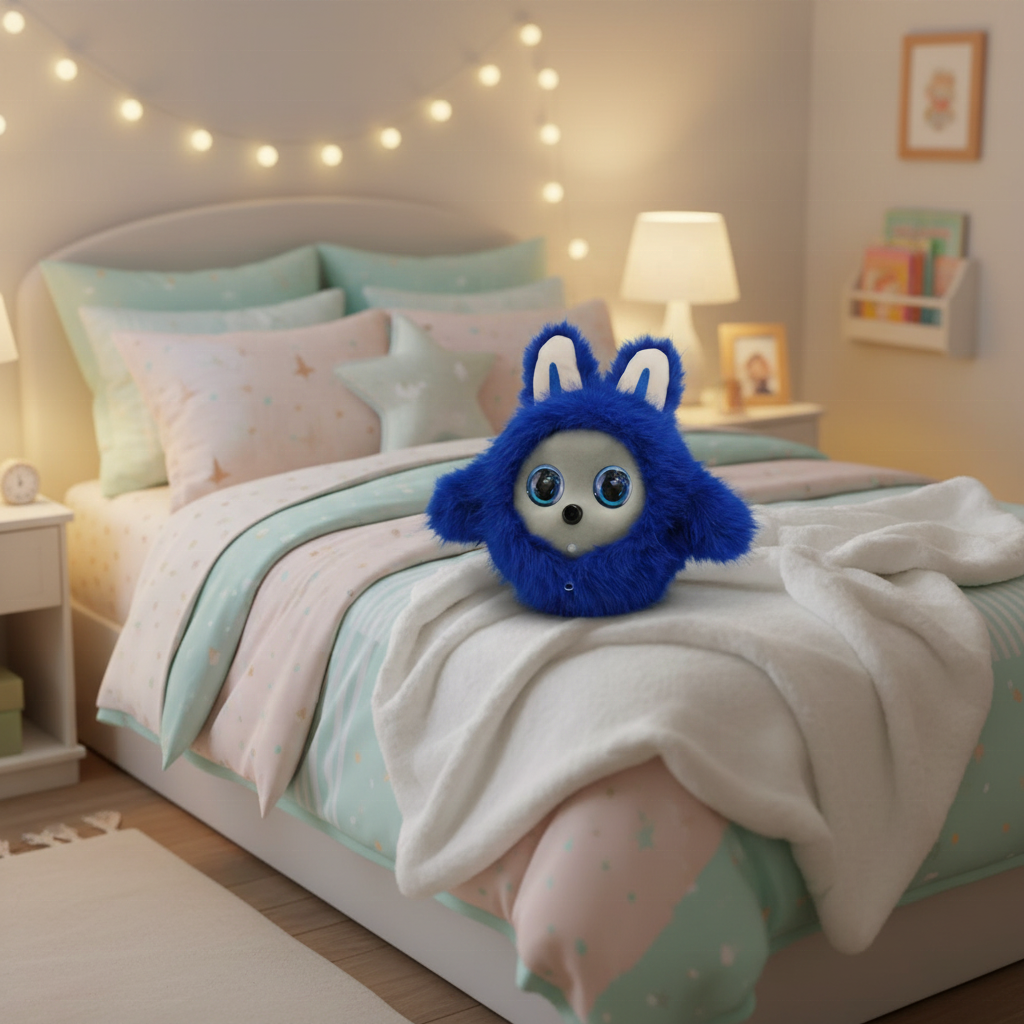




Transitioning educational robotics from deterministic rule-based playback toys to multi-modal conversational agents requires a deeply coordinated hardware, acoustic, and edge-silicon paradigm.
Standard microcontroller solutions fall short when tasked with simultaneous far-field keyword activation, voice activity detection (VAD), and low-latency audio packetization. Our hardware platform leverages an ultra-low-power dual-core RTOS system architecture (integrating high-performance RISC-V or ARM Cortex-M cores) running dedicated hardware Neural Processing Units (NPUs). This enables deterministic 35ms wake-word activation directly on-chip while keeping thermal dissipation inside the plush or polycarbonate chassis well below 31°C under continuous operational stress.
Children naturally articulate questions with varied phonetics, high ambient background interference, and close physical proximity to speaker outputs. To counteract acoustic self-excitation, our acoustic laboratory employs an engineered acoustic chamber isolating the high-output neodymium speaker from the dual I2S MEMS microphone array. Utilizing hardware-accelerated Acoustic Echo Cancellation (AEC) and Blind Source Separation algorithms, the robot achieves accurate speech recognition up to 3.5 meters even while speaking, laughing, or playing background instructional audio.
Sourcing AI hardware for minors necessitates adherence to stringent privacy frameworks including the US Children's Online Privacy Protection Act (COPPA Rule), EU General Data Protection Regulation (GDPR Article 8 / Age Appropriate Design Code), and California AB 2273. Voice input streams are transformed into transient non-identifiable feature vectors at the edge. No raw biometric voiceprints are retained locally or permanently stored on intermediary cloud gateways. Secure boot authentication and AES-256 hardware cryptographic encryption safeguard firmware integrity against unauthorized tampering.
| Architecture Subsystem | Legacy Electronic Learning Toys | ESPS Next-Gen AI Learning Robots | OEM Customization Scope |
|---|---|---|---|
| Inference Engine | Pre-recorded OTP mask ROM / MicroSD MP3 playback | Edge VAD + Hybrid Dynamic Cloud LLM routing (<800ms) | API provider routing (OpenAI, Claude, Llama 3, Local SLM) |
| Microphone Architecture | Single omnidirectional analog electret mic | Dual digital I2S MEMS array with beamforming DSP | Mic placement tuning, acoustic mesh fabric grading |
| Tactile & Affective Sensor | Mechanical dome switches (limited cycle life) | Multi-zone capacitive touch foils + 6-axis IMU drop detection | Sensor mapping, pet/tickle reaction logic tailoring |
| Firmware Upgradability | Static firmware; zero post-sale maintenance | Dual-bank A/B fail-safe encrypted FOTA over TLS 1.3 | Branded companion mobile app (iOS / Android) integration |
| Compliance Certification | Basic low-voltage toy directives | Full EN71-1/2/3, ASTM F963-17, CE-RED, FCC Part 15C, RoHS 2.0 | Target nation regulatory test reports issued in buyer's name |
Founded in 2010 in Zhangjiagang, Jiangsu, Suzhou ESPS Technology Co., Ltd. fuses precision manufacturing heritage with state-of-the-art interactive smart toy engineering.
Most consumer electronic toy supply chains suffer from a dangerous disconnect: consumer electronics assembly plants lack textile craftsmanship, while traditional plush and plastic toy manufacturers lack high-density SMT quality controls and RF acoustic design capabilities. ESPS bridges this industry void.
Stemming from over a decade and a half of precision metal stamping, structural hardware fabrication, and ergonomic mounting architectures (monitors, POS displays, and commercial TV brackets), our manufacturing team understands physical stress tolerances, cyclic mechanical fatigue, and thermal load distribution. We translate this precision engineering directly into internal robot endoskeletons, modular snap-fit battery enclosures, and robust motor gear assemblies that endure drop tests exceeding 1.5 meters onto hard tile surfaces without structural or electrical failure.
Every production batch undergoes exhaustive multi-point stress testing verified against international consumer safety benchmarks:
Strategic hardware decision-making requires commercial buyers, retail category directors, and edtech product managers to balance bill-of-materials costs against shifting technology paradigms.
Complete reliance on cloud APIs introduces latency vulnerabilities, recurring server expenses, and connectivity dropouts. Procurement forecasts show over 68% of commercial AI toys will integrate on-device Small Language Models (SLMs, 0.5B parameters) by 2027. Offline models handle core pedagogical drills, basic storytelling, and local device commands with sub-100ms response times, using cloud uplinks only for complex knowledge graphs and open-ended generative discourse.
Children do not interact with robotics purely through verbal commands. Next-generation procurement specs demand affective computing interfaces: combining speech cadence and pitch detection with dynamic LED matrix eye expressions, haptic feedback actuators, and multi-zone capacitive fur sensing. Robots that recognize emotional frustration and modulate their vocal timbre into comforting or encouraging cadences show a 340% increase in child engagement retention.
Global educational institutions and selective parenting demographics are steering procurement away from open-ended chatbots toward structured STEAM curricula. Sourcing frameworks now prioritize robots that incorporate Vygotskian Zone of Proximal Development (ZPD) algorithms. The robot continuously maps the child's linguistic, arithmetic, and logical comprehension, dynamically adjusting challenge levels rather than offering generic conversational answers.
Consumer friction regarding monthly software subscriptions on hardware products has led to a major retail shift. Procurement teams favor models with "Token-Buffered Hardware Pricing"—where 12 to 24 months of optimized cloud compute are pre-factored into the wholesale BOM through high-efficiency quantization, prompt caching, and token compression architectures, enabling frictionless retail out-of-the-box experiences.
With the European Union's Ecodesign for Sustainable Products Regulation (ESPR) taking effect, consumer toy buyers require transparent ESG documentation. ESPS supports this trend through Post-Consumer Recycled (PCR) polyester plush skins, GRS-certified inner PP cotton stuffing, halogen-free PCB substrates, and modular internal chassis designs engineered for rapid end-of-life battery and electronics disassembly.
Interactive toys with continuous Wi-Fi listen states historically suffered from 2–4 hour operating lifespans. Leading OEM specifications demand deep-sleep power states under 150μA with specialized analog Voice Activity Detection (VAD) listening modules that only wake the primary Wi-Fi/NPU circuitry when human speech patterns within human vocal frequencies (300Hz–3400Hz) are verified, stretching battery standby to 7+ days.
A proven, audit-backed engineering pipeline minimizing hardware redesign risks, accelerating regulatory clearance, and guaranteeing batch consistency.
3D CAD mechanical modeling, acoustic resonance simulation, fabric thickness selection, thermal path mapping, and internal skeleton injection mold flow analysis.
Working PCBA prototyping, anechoic chamber acoustic testing, custom wake-word phoneme training, drop shock validation, and initial EMC/RF pre-scans.
50- to 200-unit pilot run on production tooling. Jigs and test fixtures calibrated; full lab testing submitted for CE, FCC, EN71, and RoHS certificates.
High-speed automated SMT assembly, ultrasonic plastics welding, hand-stitched skin finishing, 100% functional burn-in, and DDP/FOB logistics coordination.
Direct technical and operational answers to common questions posed by global import managers, quality directors, and brand buyers.
For standard catalog models—such as the RG-AI-FZ3 fuzzy ball companion or pre-tooled conversational doll series—sampling begins at 1 unit to facilitate rapid executive review and functional evaluations. For trial production runs with standard tooling and customized packaging or firmware wake-word flashing, our baseline MOQ starts at 100 units (for models like the RG-AI-K01 series). For complete custom industrial designs (ID) requiring custom plastic injection molds, proprietary fabric skins, bespoke acoustic cavities, and custom PCB footprints, our typical tooling and production run threshold is 1,000 to 3,000 units depending on chassis complexity.
Every batch of AI learning toys engineered by ESPS is certified against the target importing territory's legal mandates. For the European Union and the United Kingdom, our models carry full EN 71 (Parts 1, 2, and 3), CE-RED (Radio Equipment Directive covering EMC, LVD, and RF performance under ETSI EN 301 489 / ETSI EN 300 328), and RoHS 2.0 (Directive 2011/65/EU). For North America, models comply with ASTM F963-17, CPSIA total lead and phthalate limits, and FCC Part 15 Subpart C for intentional radiators. All integrated lithium polymer battery cells include certified UN38.3 test summaries, MSDS documentation, and 1.2m drop test reports for sea and air freight safety.
We implement a privacy-by-design hardware and network topology. The robot operates with no persistent local storage of raw voice audio. Digital MEMS microphone buffers are processed transiently in volatile RAM for immediate tokenization. Audio streaming over wireless interfaces uses TLS 1.3 encryption with certificate pinning to prevent man-in-the-middle attacks. Furthermore, our cloud firmware routing can connect directly to your own enterprise-managed LLM endpoints or our COPPA- and GDPR-compliant secure routing gateways, which purge all chat logs, user telemetry, and IP associations immediately following text-to-speech synthesis.
Yes. We offer deep software-level localization. We can train lightweight offline neural network wake-word models for your brand name or designated robotic character name (e.g., "Hey Bunny", "Hello Sparky") with an acoustic false-alarm rate below 1 per 24 hours. For dialogue engines, our firmware connects with multilingual translation layers supporting over 40 native languages and localized regional accents (including English UK/US/AU/IN, Spanish EU/LATAM, French, German, Arabic, Japanese, and Korean). Custom prompt templates can also constrain the AI's personality to align strictly with your brand's tone of voice and age-appropriate guidelines.
As both an SGS-verified custom manufacturer and experienced trading company, we accommodate FOB (Shanghai / Ningbo), CFR, CIF, EXW, CIP, FCA, CPT, and DDP (Delivered Duty Paid directly to your fulfillment warehouse or 3PL hub). Standard payment terms for volume production runs are typically T/T (30% deposit upon tooling/order confirmation, 70% balance payable upon inspection clearance prior to bill of lading release), payable in USD or CNY. Tooling lead times range from 20 to 30 calendar days, while mass production runs generally complete within 25 to 35 days depending on raw material procurement cycles.
Every single assembled PCBA and finished robotic unit passes through automated acoustic test chambers on our production lines. Using calibrated reference microphones, automated test suites execute rapid frequency sweeps to measure Total Harmonic Distortion (THD), SPL output consistency (calibrated to the strict 85dB child hearing safety threshold mandated by EN 71-1), and microphone sensitivity within +/-1.5dB tolerances. Concurrently, an RF shield box verifies Wi-Fi and Bluetooth transmission power and packet error rates to guarantee reliable wireless connectivity throughout residential environments.
Our Zhangjiagang facility houses both dedicated electronic SMT assembly lines and specialized textile sewing and ultrasonic welding workshops. Sensitive electronics—such as the motherboard, battery pack, and speaker driver—are enclosed in rigid, injection-molded, fire-retardant (UL94-V0) ABS/polycarbonate sub-chambers before insertion into the outer fabric. This ensures that needle punctures during final closing seams never risk piercing internal wiring or battery cells. Vibration dampeners isolate internal audio feedback, ensuring high tactile cuddliness alongside robust drop resistance.
