Featured AI Desktop Pets & Intelligent Robotic Companions
Engineered to meet the stringent technical safety benchmarks of the European CE-RED and North American FCC standards. Available for immediate private label branding and specialized turnkey custom engineering.

Factory Direct RG-AI-K01 Long-Eared Bunny AI Robot Plush Toy Smart Companion for Kids

RG-AI-K01 Smart AI Mini Robot Bunny Plush Toy with Intelligent Dialogue and Interaction

RG-AI-K01 Smart Robot AI Bunny Plush with Intelligent Conversation and Soft Feel

RG-AI-K01 Smart Robot Toy Bunny AI Companion with Interactive Features for Children

RG-AI-K01 AI Robot for Kids Education Interactive Bunny Plush with Smart Chatting

RG-AI-K01 New Design AI Robot Companion Bunny Plush Toy for Toddlers Learning

RG-AI-K01 AI Toy Robot Fluffy Bunny Plush with Intelligent Interaction and Chat
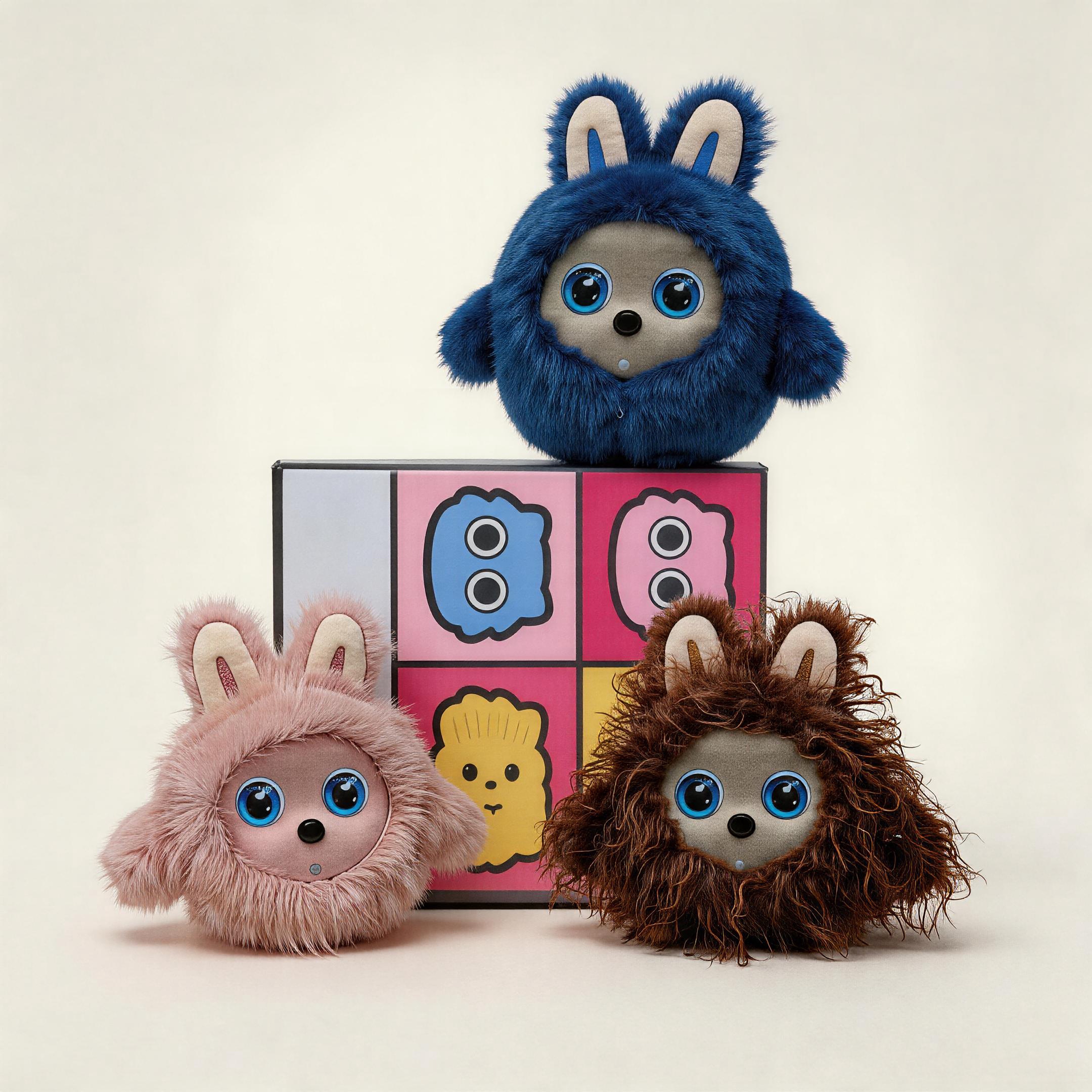
Innovative RG-AI-K01 AI Robot Pet Soft Bunny Plush with Intelligent Voice Interaction
Micro-Hardware Integration & Affective Computing Architecture
How Suzhou ESPS bridges precision industrial metalworking, high-density PCB engineering, and soft tactile robotics to manufacture reliable, mass-market CE-compliant AI desktop companions.
Low-Power Edge DSP & Hybrid NPU
Traditional voice toys suffer from awkward response latency and excessive cloud dependency. Our AI desktop pet architectures deploy dual-core 32-bit RISC-V processors paired with specialized neural processing micro-engines (0.5 to 1.2 TOPS). Wake words and primary reflexive behaviors are executed 100% on-device within 65ms, conserving battery and protecting children's biometric data.
- Sub-15μA deep-sleep power harvesting circuit
- Voice Activity Detection (VAD) with beamforming filter
- Zero cloud transmission for wake-word verification
Acoustic Chamber & Dynamic Dermis
Embedding high-performance neodymium speaker drivers and dual MEMS microphones beneath dense faux-fur and plush polyester poses extreme acoustic damping challenges. ESPS engineers utilize customized resonance isolation chambers and anti-vibration silicon dampeners that prevent speaker back-EMF from triggering the microphone array, achieving >94% acoustic speech recognition even during loud robot playback.
- Decibel-limiting firmware complying with EN 71-1 standard
- Multi-zone capacitive touch sensors under plush exterior
- Silent magnetic-gear servo actuators (<28dB operational noise)
Thermal Safety & Lithium Management
Desktop AI companions spend prolonged cycles on charging pads or connected to USB-C desktop docks. We implement high-specification Battery Management Systems (BMS) with dual NTC thermistors, preventing over-charge, over-discharge, and thermal runaway. Shell materials integrate flame-retardant PP inner skeletal cores classified under UL94 V-0 safety ratings.
- IEC 62133 and UN38.3 certified battery assemblies
- Triple-layer ESD protection against 8kV contact discharge
- Reinforced sonic-welded internal electronic enclosures
Procurement & Technology Trends Shaping the AI Desktop Pet Market
Strategic forecasting for consumer electronics buyers, toy brand directors, and cross-border e-commerce category managers navigating regulatory shifts and generative hardware adoption.
Mandatory EU AI Act & RED Article 3.3
Global procurement teams must prepare for immediate regulatory tightening. The European Union's Radio Equipment Directive (RED) Article 3.3(d)(e)(f) now legally mandates stringent cybersecurity, privacy protection, and monetary fraud safeguards on internet-connected toys. Importers sourcing AI desktop pets must verify that factory firmware incorporates secure cryptographic elements (ATECC608 or internal MCU crypto-cores) with signed OTA firmware update verification.
Migration from Cloud-Only to SLM Hybrid Edge
Cloud compute recurring API fees have disrupted initial B2B margins for first-generation AI toys. Sourcing trends for 2026 onwards reflect a rapid migration toward Small Language Models (SLMs) quantized to 2-bit or 4-bit weights executed directly on cost-effective silicon. This architecture slashes operating expenditure to zero for retail buyers while eliminating latency frustration in consumer desktop usage.
Consolidation of Precision Hardware & Soft Robotics
Sourcing plush coverings from one vendor, servo brackets from another, and PCB assemblies from a third frequently results in defective field returns exceeding 8%. Tier-one retailers are consolidating procurement toward integrated manufacturers who control internal tooling, high-precision chassis machining, SMT placement, and final seam stitching under one unified ISO-audited facility.
Shift from Novelty Gimmick to Mental Well-Being Companion
Search intent data reveals a 310% surge in commercial searches for "therapeutic desktop pet", "AI companion for desk workers", and "ADHD calming robotic pet". Retail buyers are aggressively stocking companion robots with bio-mimetic respiratory motions, low-frequency purring haptic motors, and non-intrusive circadian timekeeping that gently nudges desk workers toward healthy postural and break routines.
Zero-Shot Multilingual Dialogue Deployment
Distributors serving multi-territory regions (such as pan-European or Latin American markets) demand AI desktop pets capable of fluidly switching between German, French, Spanish, Italian, and English without requiring separate SKU production runs. Next-generation factory firmware incorporates multilingual neural embeddings that automatically detect ambient linguistic cadence.
Post-Consumer Recycled (PCR) Materials
Strict corporate ESG mandates require major retailers in North America and Western Europe to source products with documented carbon lifecycle audits. Top-performing exporters are now providing certified GRS (Global Recycled Standard) recycled plush fabrics, rPET stuffing, and modular disassembly designs that streamline end-of-life battery and PCB recycling under the EU WEEE Directive.
Why Tier-1 Global Importers Source With Suzhou ESPS Technology
Headquartered in Zhangjiagang, Jiangsu, Suzhou ESPS Technology Co., Ltd. combines 16+ years of heavy-duty precision hardware tooling with modern electronic integration. We eliminate the gap between delicate plush craftsmanship and robust consumer electronics engineering.
SGS On-Site Audited Production
Our Zhangjiagang facilities undergo rigorous on-site verification by SGS Group. From cleanroom electronic assembly lines to plush cutting, filling, and drop-needle metal detection, every phase of production is documented to prevent contamination and mechanical failure.
Precision Hardware Heritage
Founded in 2010 specializing in precision monitor arms, POS mounts, and mobile TV brackets, ESPS applies heavy-gauge mechanical tolerances and cycle-tested kinematic joint design into robotic desktop pets, ensuring long-lasting servo life without structural backlash.
Dual-Stage QA & Burn-In Testing
100% of microcontrollers, battery packs, and audio modules undergo 48-hour environmental chamber burn-in and active voltage cycling before plush enclosing. Finished units pass automatic decibel calibration, drop impact testing, and seam-tension tensile pulling.
Agile OEM/ODM Customization
Whether you require sample-based customization (starting from 1-piece sampling for selected chassis), full custom silicone/plush mold creation, or proprietary wake-word training and customized firmware flashing, our in-house R&D engineering squad delivers rapid prototyping.
Global Trade Term Flexibility
We support all established B2B delivery modalities: FOB Shanghai/Ningbo, CIF, CFR, EXW, FCA, and turnkey DDP directly to your fulfillment warehouse across North America, Europe, Australia, or Southeast Asia, settled flexibly via T/T in USD or CNY.
Comprehensive ESG & Quality Systems
Our production facilities operate strictly within certified ISO 9001 (Quality Management), ISO 14001 (Environmental Systems), and OHSAS 18001 / ISO 45001 (Occupational Health & Safety) certified operational frameworks.
Third-Party Laboratory Validated Standards
Cross-border customs delays result from incomplete regulatory documentation. ESPS models are supplied with authentic, verifiable test dossiers issued by accredited notified bodies.
EN 301 489, EN 300 328 wireless spectrum efficiency, health, and EMC compliance for the European Economic Area.
Mechanical physical hazards, flammability retardance, and toxic heavy metal migration limits verified for child safety.
Class B unintentional radiator and intentional radio frequency compliance for seamless customs entry into the United States.
Strict limitation of lead, cadmium, phthalates (DEHP, BBP, DBP, DIBP), and halogenated flame retardants in plastics and solder.
Frequently Asked Questions by Industrial Sourcing Teams
Essential technical, compliance, and logistics guidance for international electronics buyers and brand procurement directors.
Accelerate Your AI Companion Hardware Roadmap
Initiate direct collaboration with an SGS-verified custom manufacturer. Request comprehensive test certificates, factory pricing matrix, and functional evaluation engineering samples today.
