Choosing the best remote control robot dog in 2026 depends on more than realistic barking or a shiny coat. A useful model should respond predictably, turn smoothly, and stay upright on the floors where it will actually be used. Check its control range, battery life, charging time, and the availability of replacement parts. Small details matter. A controller that feels awkward in a child’s hands can make even an entertaining toy frustrating. So can a robot that struggles on a rug or stops after a brief play session.
This guide explains how to compare robot dogs by age suitability, movement, sound, build quality, and ease of setup. Product descriptions can be helpful, but advertised features do not always show how a toy performs in a busy home. Look for clear specifications and consistent details across reliable product information. Consider whether the dog uses a handheld remote, an app, or both, and whether its sounds and movements suit the intended user. No single model wins every living room. A quieter, simpler robot may be better for one family, while another may value tricks and interactive responses. Expectations need a little checking, too: a toy robot cannot behave like a living pet. The right choice balances realistic features with practical limits, so play stays enjoyable after the first few minutes.
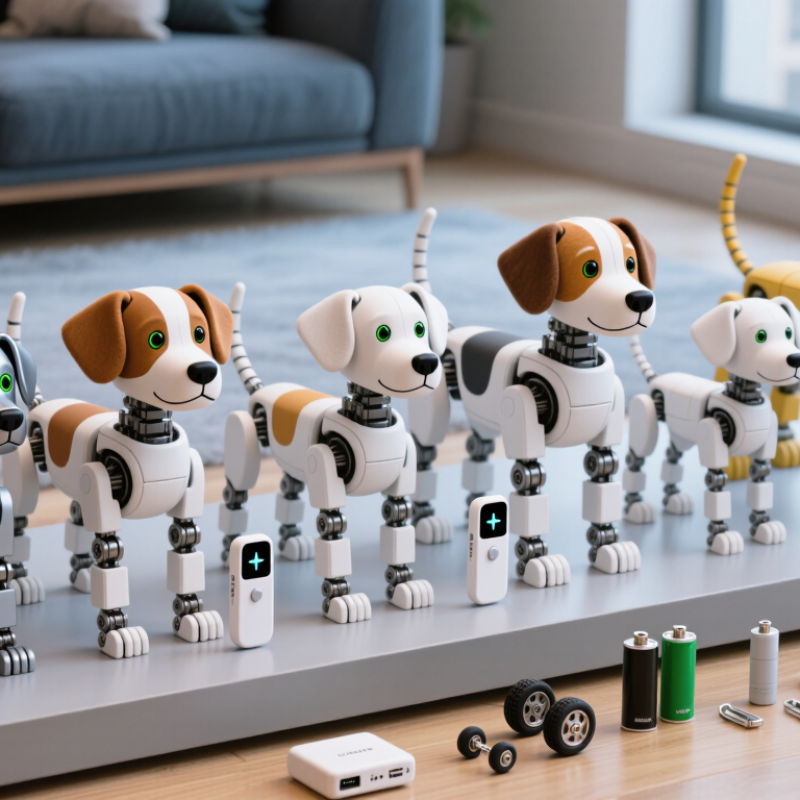
A remote control robot dog is a four-legged machine that follows commands from a handheld controller, phone, or computer. When you press a direction, the controller sends a wireless signal to the dog’s onboard computer. That computer coordinates small motors in the legs, adjusting their movement to walk, turn, sit, or recover balance. The response may feel immediate, but it depends on signal strength, motor speed, and the surface underfoot.
More capable models combine remote commands with sensors, such as cameras, depth sensors, or motion detectors. These help the robot estimate its position and avoid obstacles. Some actions are directly controlled; others rely on onboard software. That distinction matters. A robot may look autonomous while still needing careful input.
The International Federation of Robotics’ World Robotics 2024 report counted 4,281,585 industrial robots operating worldwide in 2023. This figure does not measure robot dogs, but it shows how established robotic control systems have become.
Consumer robot dogs still vary widely in stability, responsiveness, and battery life. A smooth floor is not the same as a rug or a doorstep.
A good remote-control robot dog should turn smoothly, stop reliably, and respond without confusing delays. Look for controls that are easy to learn, sturdy joints, and sensors that help it avoid chair legs or table edges. Battery life matters, too: a toy that needs frequent charging may lose its appeal quickly. The International Federation of Robotics’ World Robotics 2024 report recorded 205,000 professional service robots sold in 2023, up 30% year over year. That figure covers many robot types, not robot dogs specifically. It is useful context, not a direct measure of toy quality.
Tips: Test the controls on a clear floor, then near a rug edge. Check whether the dog can turn, sit, or walk at a steady pace. Read the age guidance, and check how small parts and charging are handled. Small details count.
A responsive remote is more useful than a long list of tricks. Watch for lag between a button press and a movement, especially during turns. A practical design should also tolerate gentle bumps and have edges that feel smooth to the touch. Product descriptions can make every model sound impressive; they rarely show how awkward a movement looks in a tight room. I would compare demonstrations with the listed battery runtime and control range, rather than assuming a polished video tells the whole story.
Choosing the best remote control robot dog in 2026 starts with the person who will use it. A young child may need large buttons and simple movements, while an older user might enjoy programmable actions. Check the recommended age, controller layout, and whether the dog responds reliably from across a typical room. Try it on carpet and hard flooring if possible. Small wheels can behave differently on each surface.
Compare movement, sound, and interaction rather than counting features alone. Does the dog turn smoothly, sit on command, or repeat tricks without constant correction? Listen to its volume in a quiet room. Some sounds become tiring faster than expected. Battery life matters too, but advertised runtime may not match play with lights and movement active. Look for charging time, battery replacement details, and clear instructions. A sturdy body and securely fitted parts are useful, especially with frequent handling.
Think about the whole experience. Is the controller comfortable for small hands? Are buttons easy to distinguish? Check the return policy and support information before buying, since a toy that stops responding can be frustrating. Price is only one part of value. I would give extra weight to dependable controls and repair clarity, even if that means fewer tricks. Still, comparing models in person is not always possible, so product descriptions deserve a careful second look.
The best remote-control robot dog in 2026 depends on who will use it and where it will run. Basic models focus on simple commands, sound effects, and repeatable tricks. They suit short play sessions on a smooth floor. Their controls are usually easier to learn, but movement may feel limited.
Programmable models add features such as touch sensors, obstacle response, or beginner-friendly coding. These can hold a child’s interest longer, though setup may take patience. Look for clear instructions and controls that remain responsive across a room. Check the stated battery life, too; frequent charging can interrupt play.
More advanced quadruped models offer steadier walking, wider movement, and sometimes app-based control. They may handle rugs better, but extra features can mean a higher price and more complex operation. Not every model climbs well. That difference is easy to miss in polished product photos. Compare demonstrations on surfaces similar to your home, and check whether replacement parts and support are available. A quieter motor, secure battery compartment, and durable joints may matter more than a long list of tricks. There is no perfect choice; the right balance depends on the user, space, and budget.
The best remote control robot dog is the one that fits your space, age range, and expectations. Start by checking its control method: a handheld remote can feel more direct, while an app may offer extra settings but depends on a compatible phone. Look for clear instructions, responsive controls, and a stated operating range. A large range matters less if you plan to use the toy in a small living room.
Match the robot’s movement to the surfaces where it will run. Small wheels or feet may handle smooth floors well but struggle on thick rugs, door thresholds, or uneven pavement. Check the recommended age, moving-part warnings, and whether the battery is replaceable. Battery life can vary with speed and sound effects, so treat advertised run times as estimates. Short play sessions are normal.
Think about noise and storage, too. A robot that barks loudly may be exciting outdoors and tiring near a quiet workspace. Measure the space where you expect to use it, and check how long charging takes before play. If possible, read reviews that describe actual control response, not just appearance. One imperfect detail: feature lists can make every model seem capable, but they rarely show how frustrating a slow connection feels in a busy room.
It should turn smoothly, stop reliably, and respond quickly. Easy controls and sturdy joints matter.
Try turns and simple commands on a clear floor. Watch for delays after each button press.
They can help the dog avoid chair legs or table edges. They do not guarantee it will avoid every obstacle.
Frequent charging can interrupt play. Compare the stated runtime with the time you expect to use it.
A basic model with simple commands may be easier to learn. Short play sessions on smooth floors are a practical test.
Touch sensors and beginner-friendly coding may keep a child engaged. Setup can take patience, though.
Some handle rugs better than others. Check demonstrations on surfaces like yours; polished photos can hide awkward movement.
Check age guidance, small parts, charging, and the battery compartment. Quiet motors and durable joints may matter more than extra tricks.
No. A 2024 report recorded 205,000 professional service robots sold in 2023, across many robot types. It does not measure toy quality.
A remote control robot dog is an interactive robotic companion that responds to commands from a handheld controller or other simple controls. Depending on its design, it may walk, turn, perform tricks, make sounds, or react to touch and movement. In 2026, a good model balances reliable controls with stable movement, durable construction, responsive features, and a battery life suited to its intended use. Simple, clear controls can make a big difference, especially for younger users or anyone new to robotic toys.
To compare models, consider how smoothly they move, which commands and interactive functions they support, how easy they are to operate, and whether their size and durability fit your setting. Some robot dogs focus on basic play, while others offer more lifelike responses or a wider range of actions. The best choice depends on the user’s age, interests, available space, and budget. Matching these needs to a model’s features can help you choose a robot dog that is enjoyable, practical, and appropriate for everyday play.